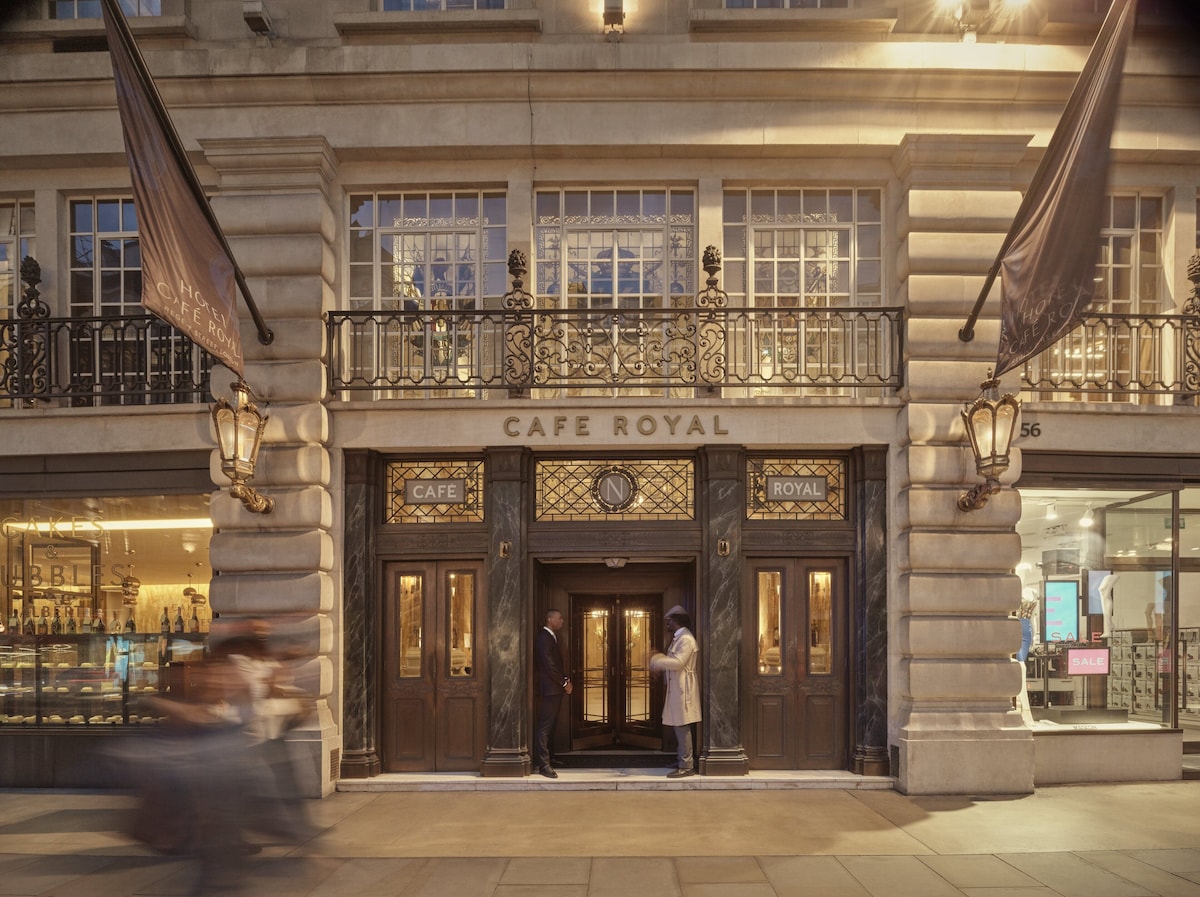
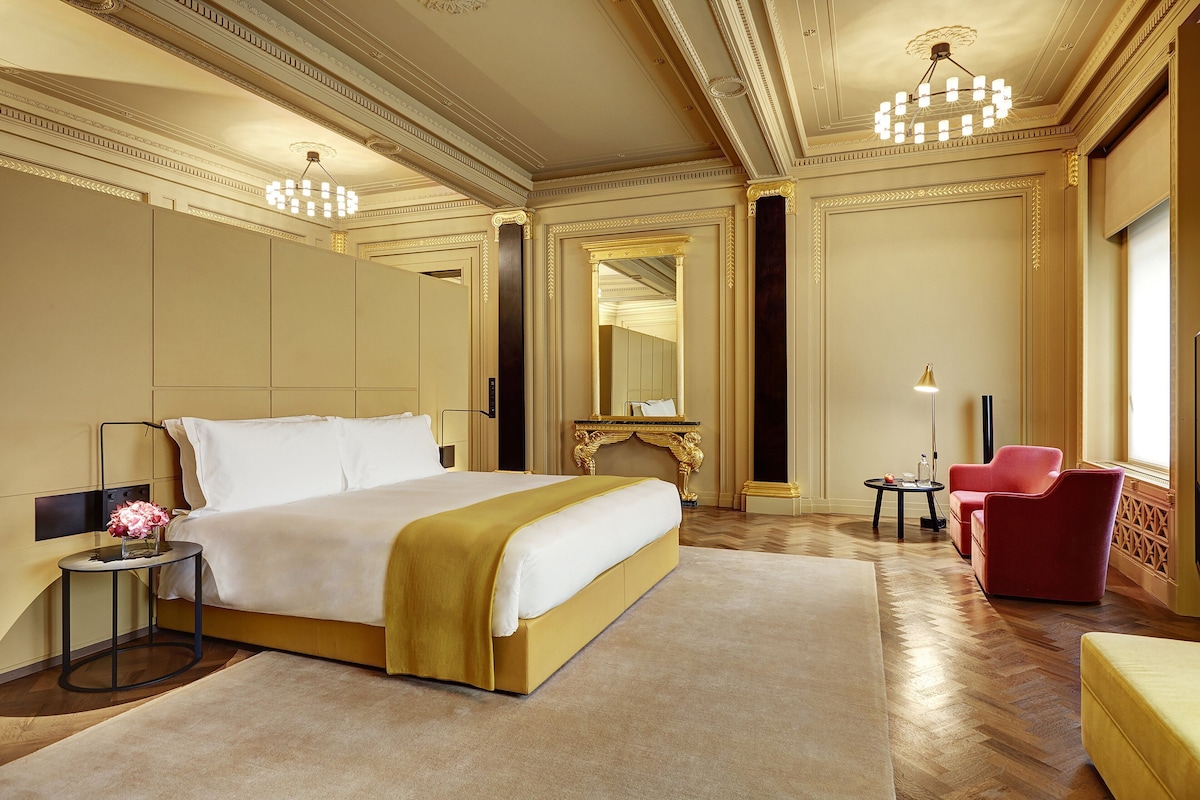
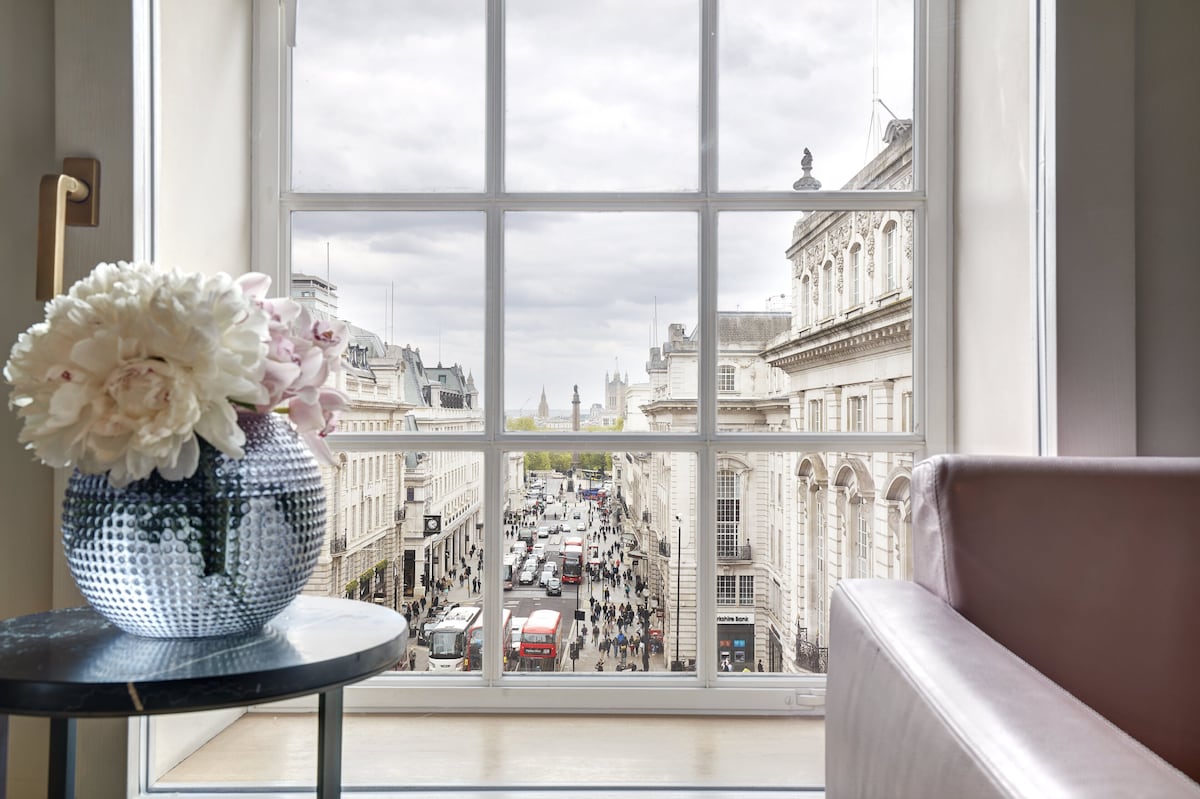
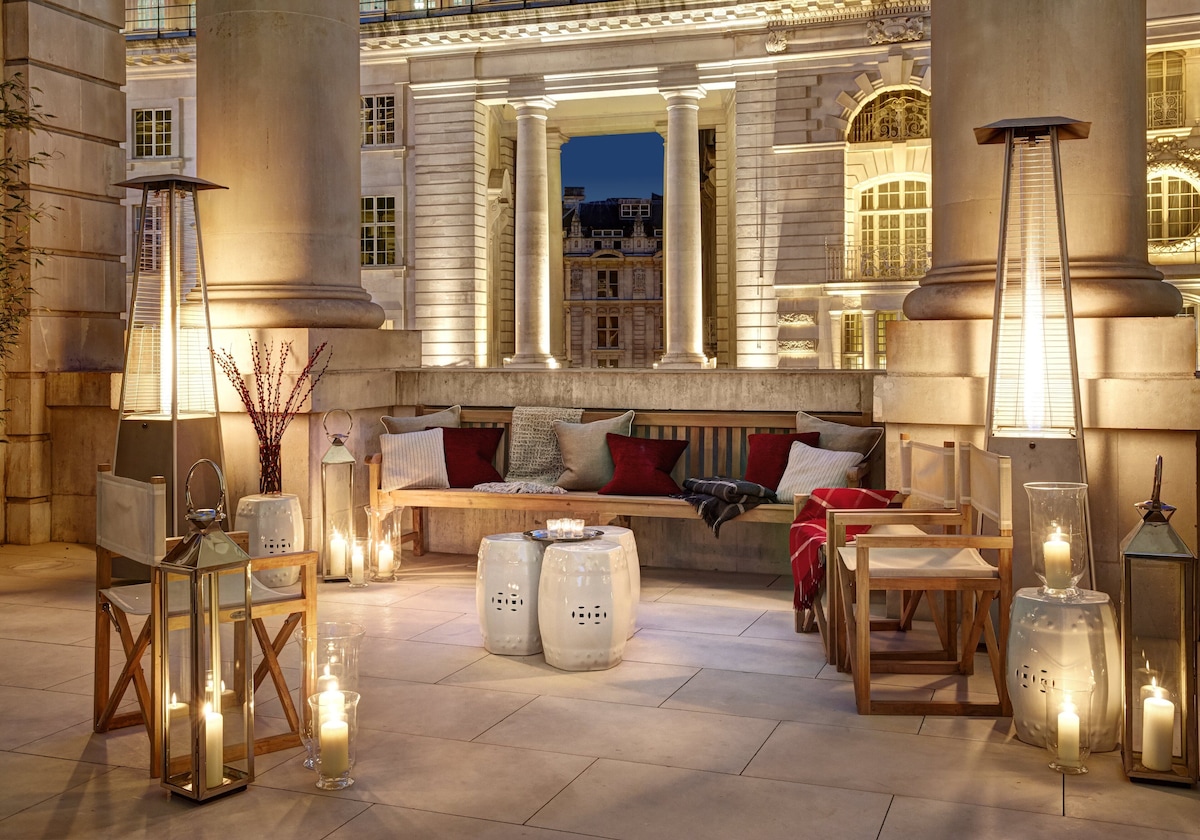
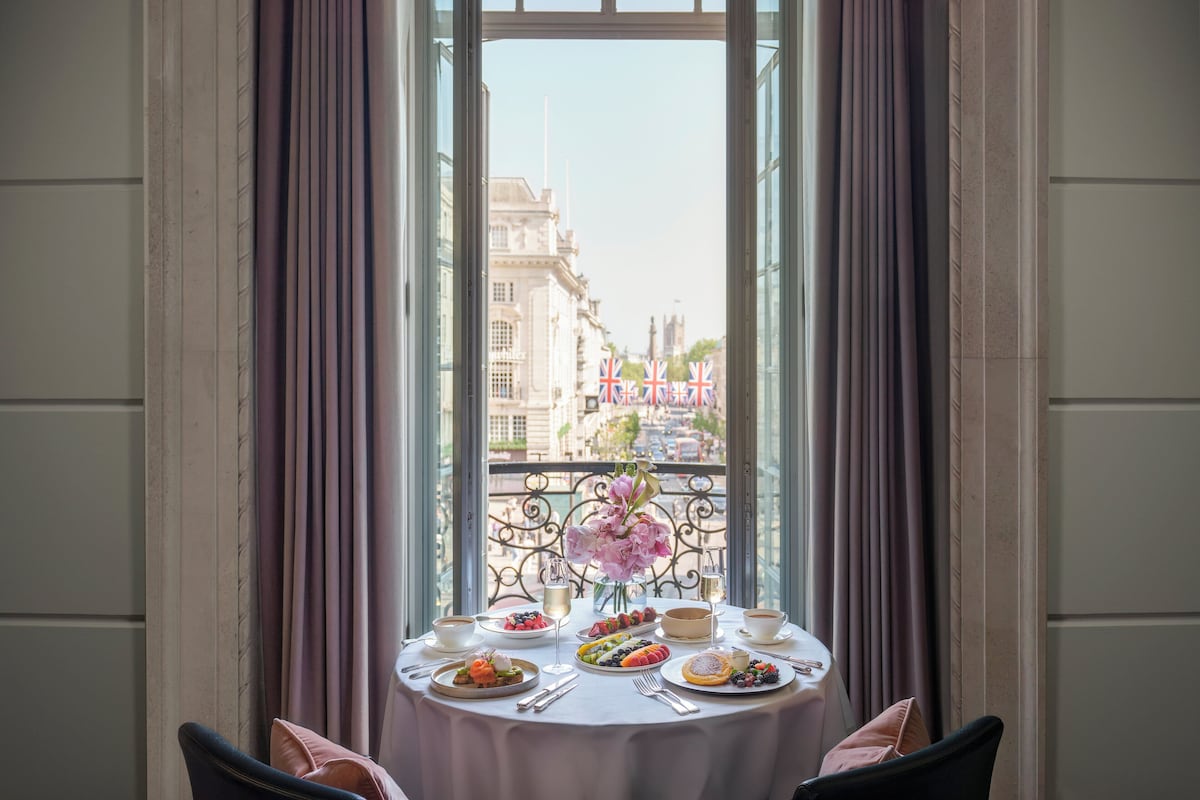
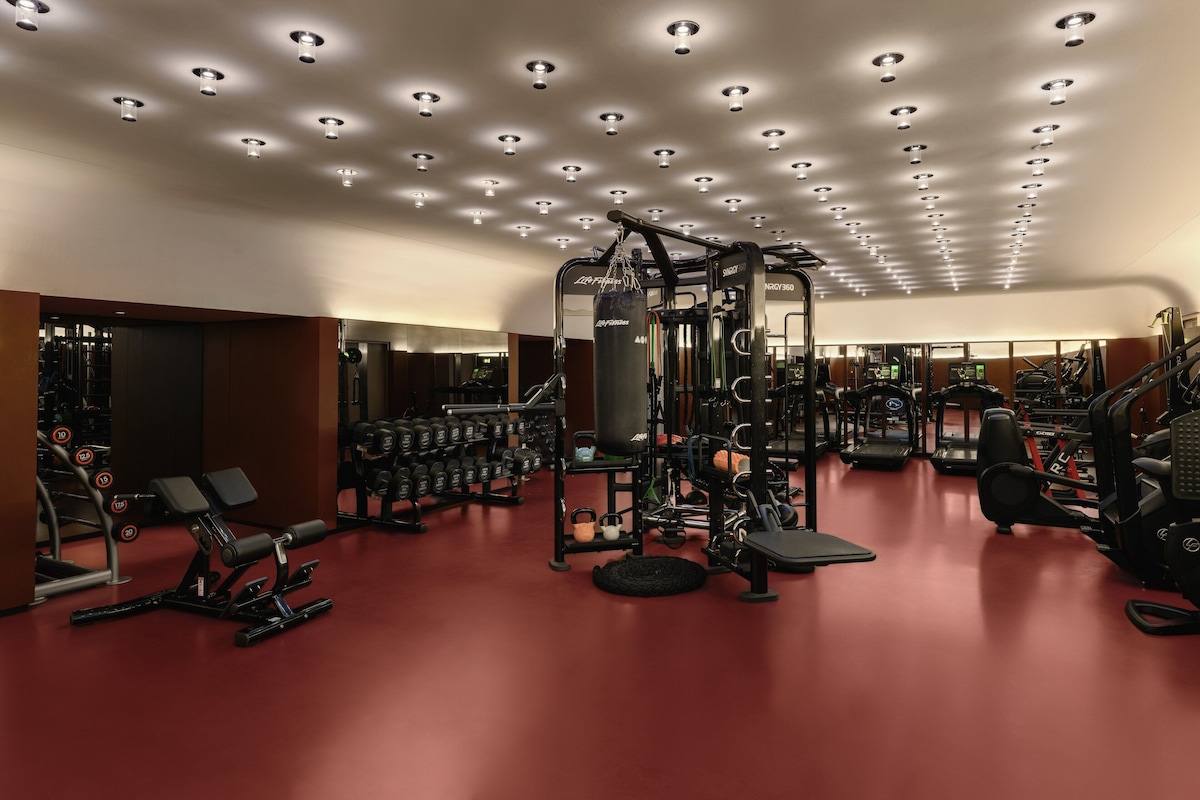
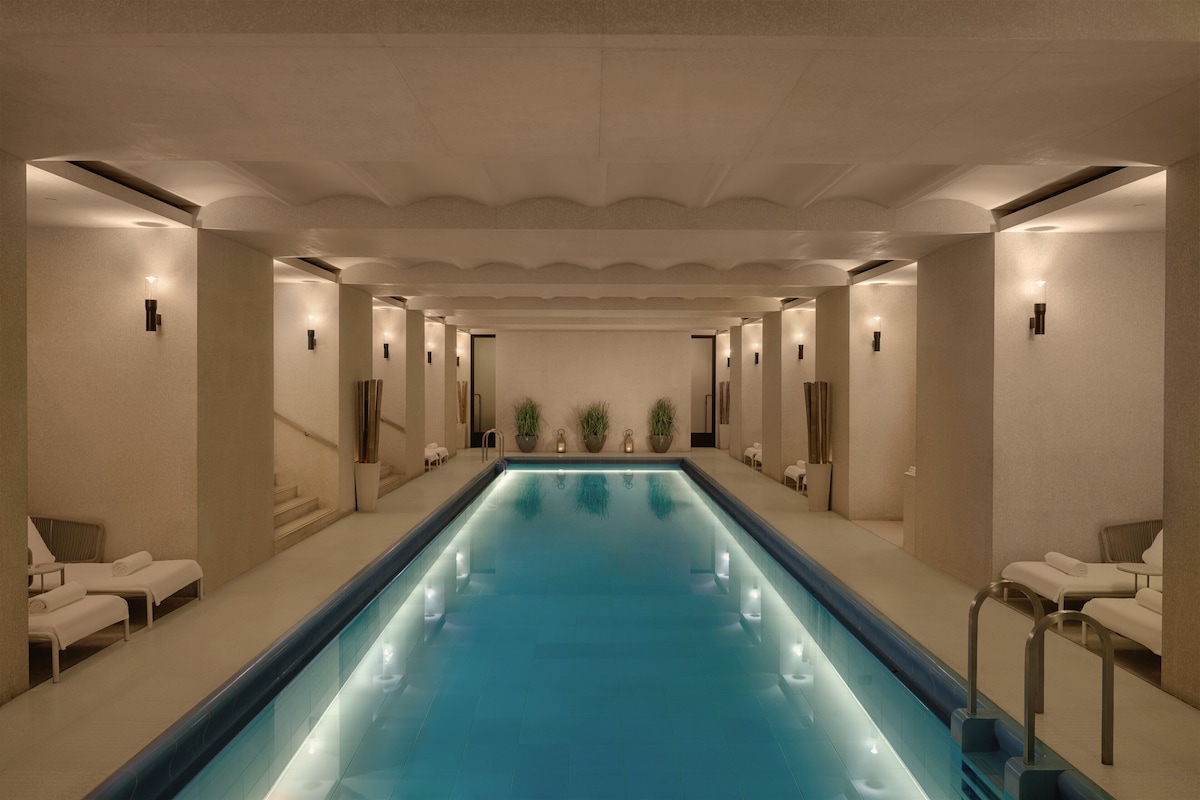
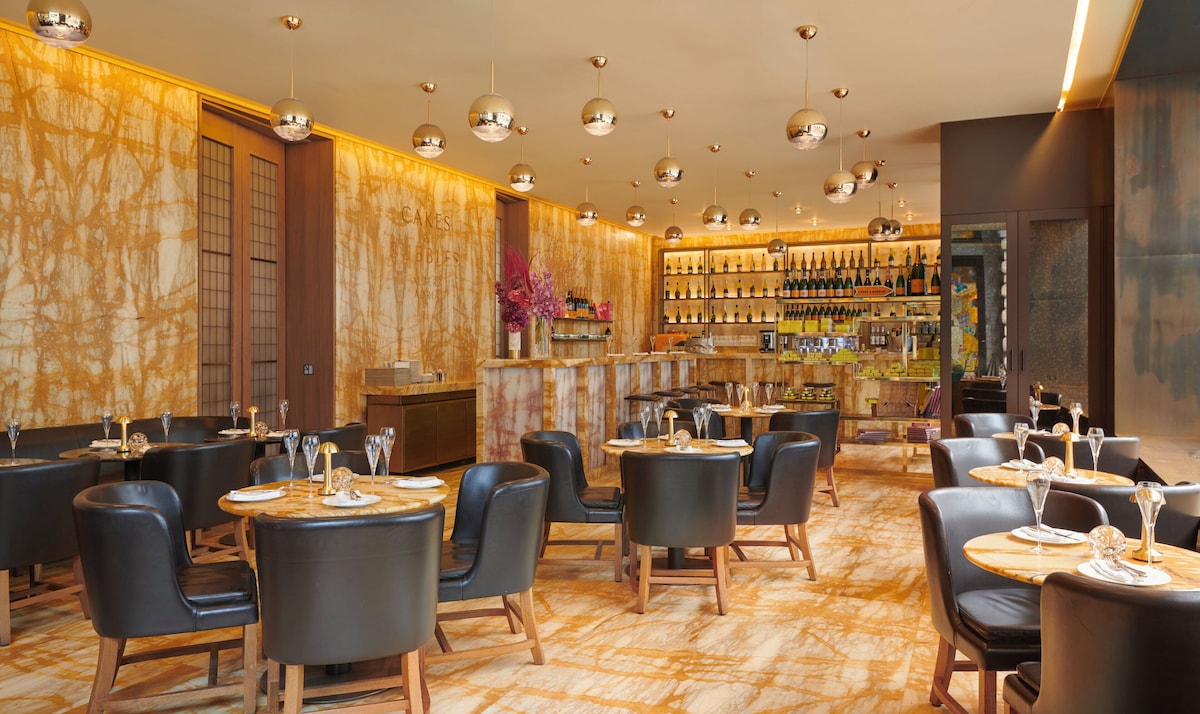
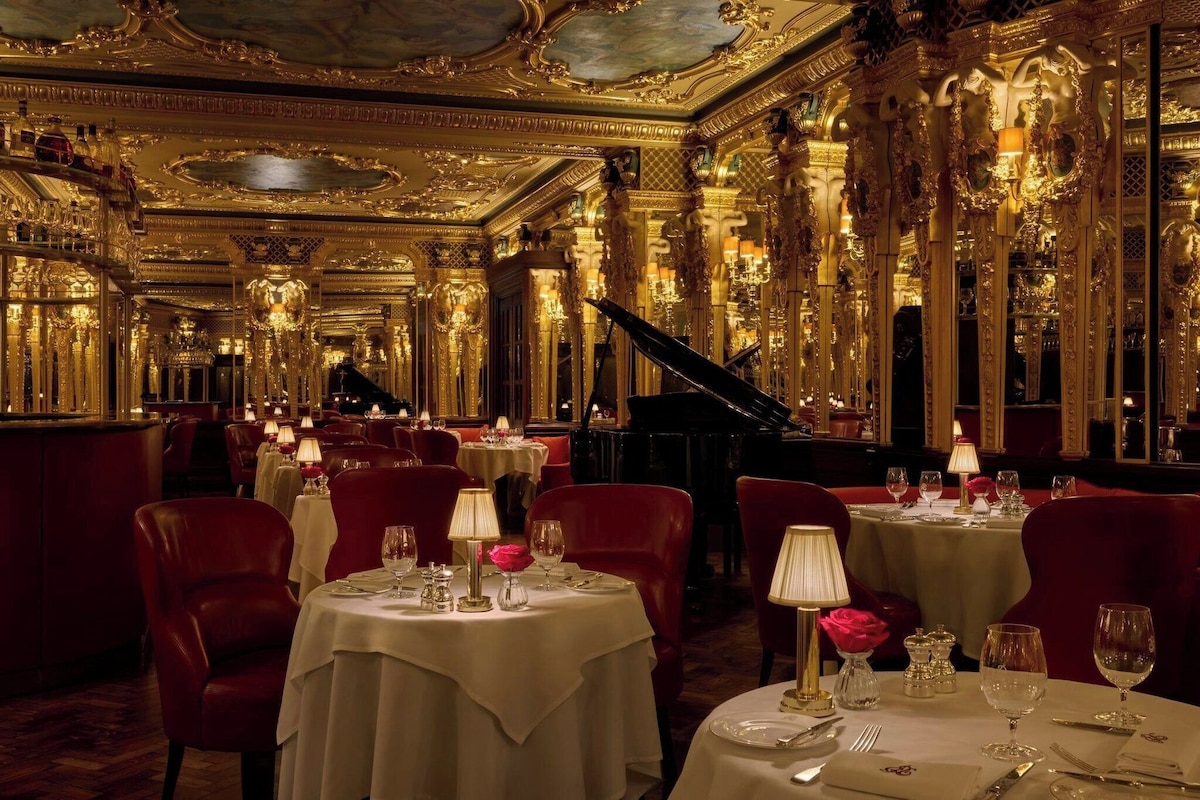
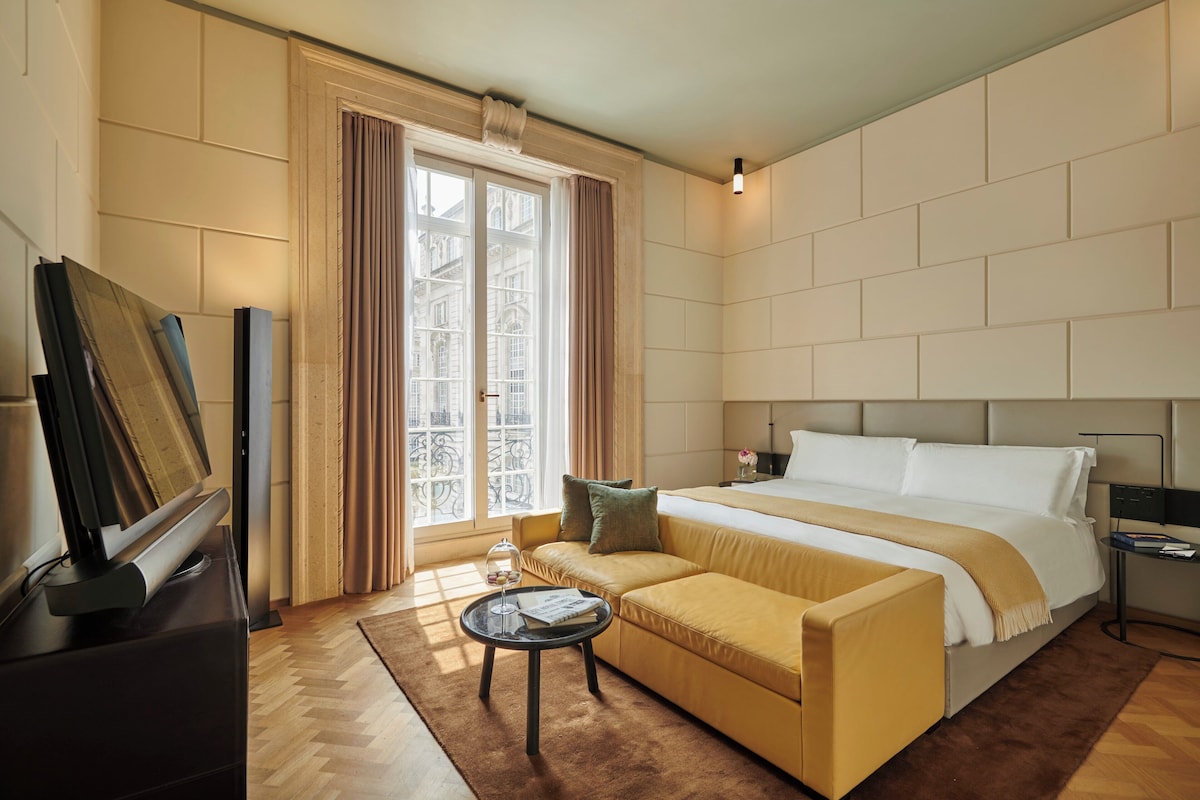
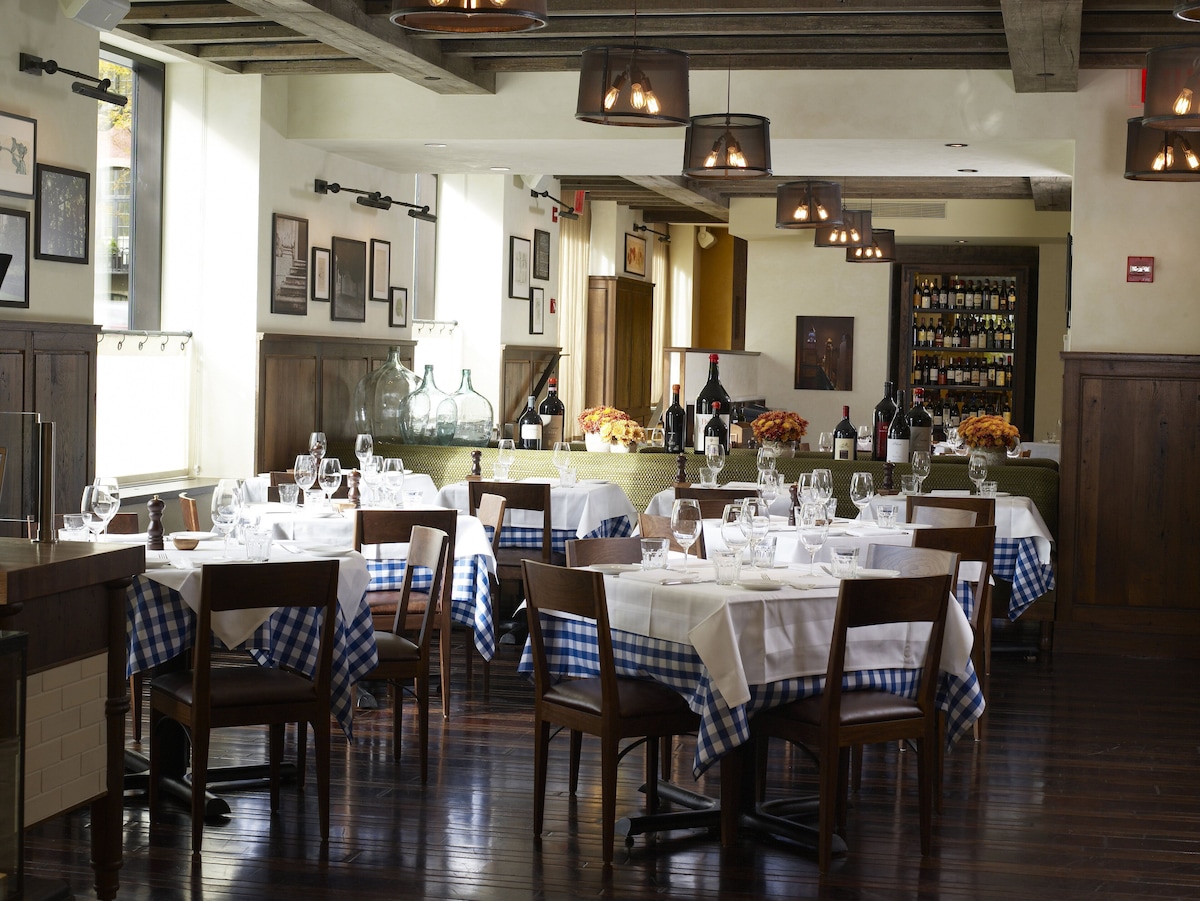
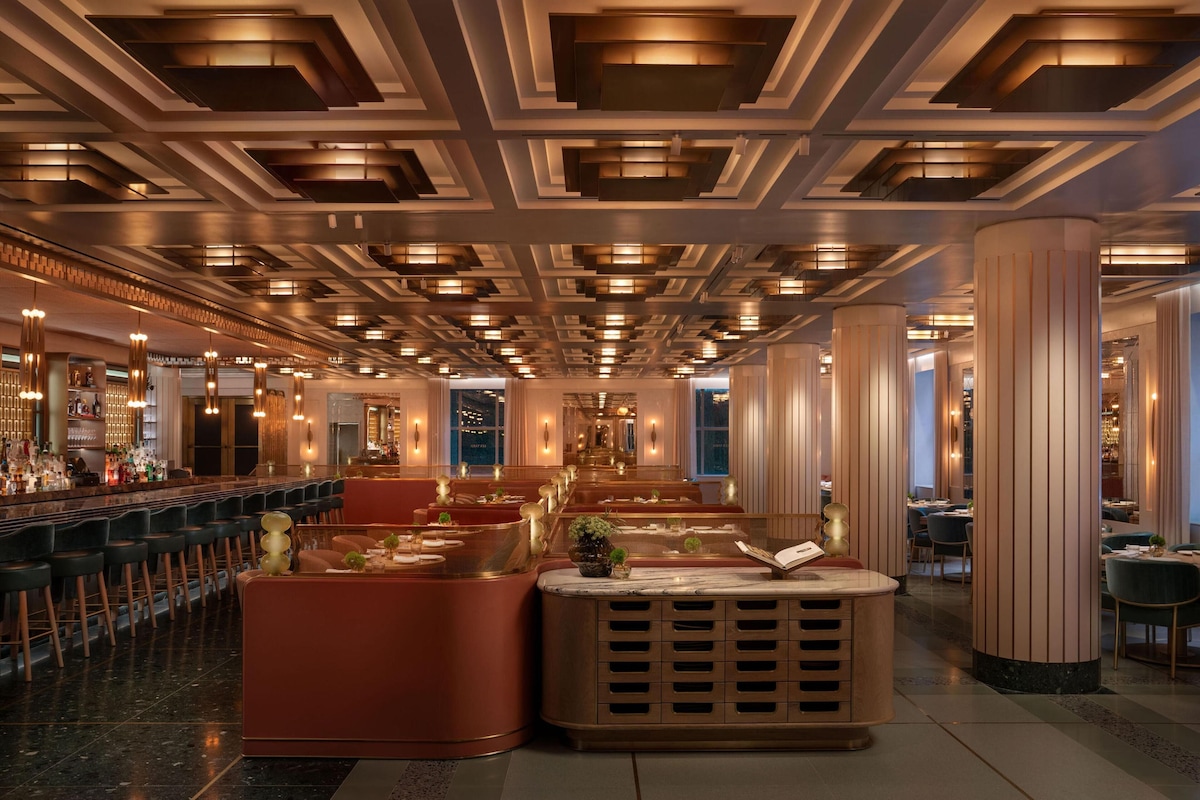
Café Royal’s restored public rooms from the 1860s and 1920s give this Regent Street hotel its architectural weight. Their Grade II-listed interiors became part of a new chapter in 2012, when the former café opened as a hotel following a conversion designed by David Chipperfield. Today, understated contemporary rooms and suites sit within that historic framework, with Soho, Mayfair, and St. James’s close at hand. Dining remains central to its identity: Café Royal Grill serves British cooking in a listed setting, Alex Dilling offers French tasting menus overlooking Regent Street, and Albert Adrià’s Cakes & Bubbles makes desserts and Champagne an occasion of their own.
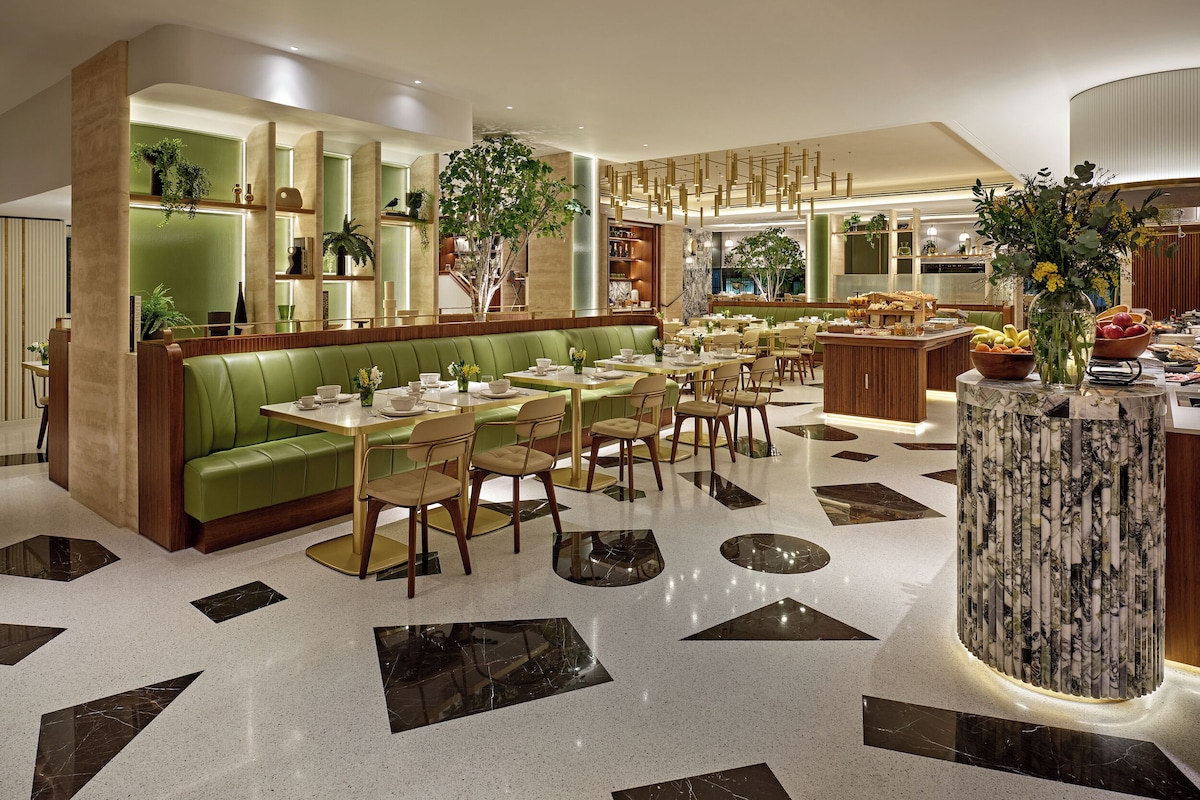
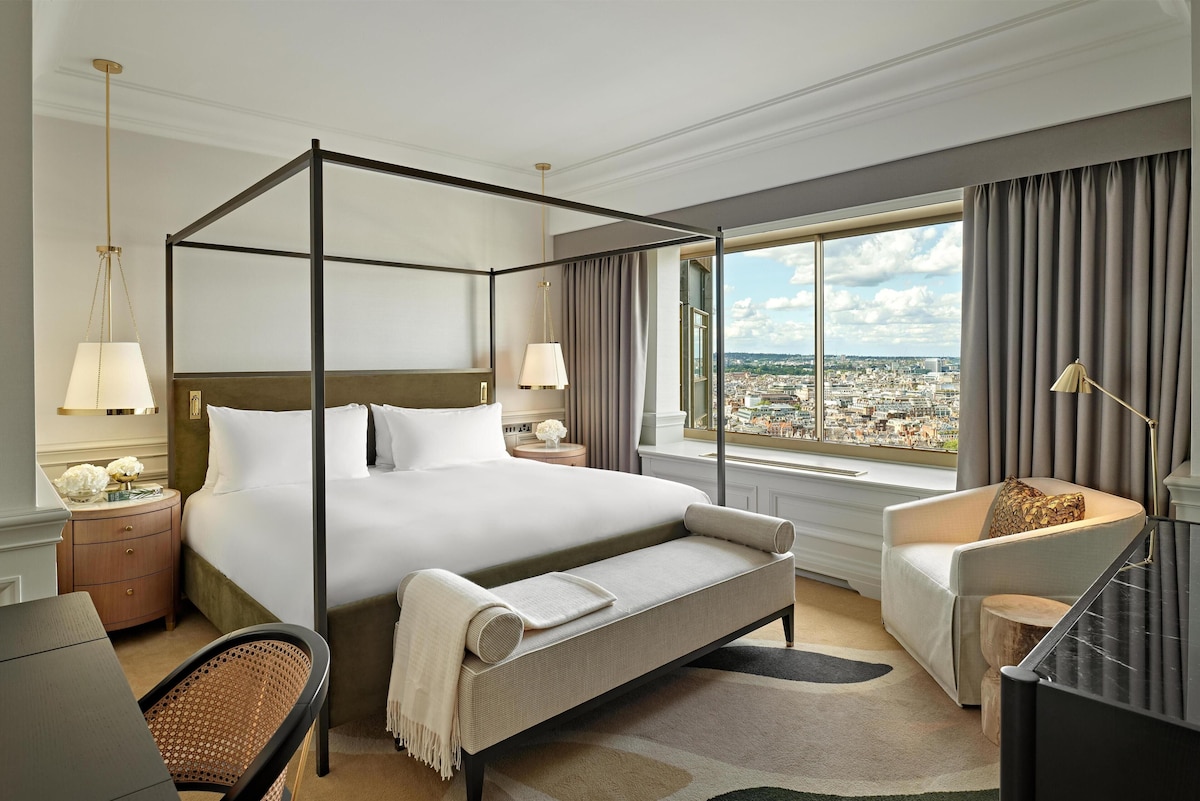
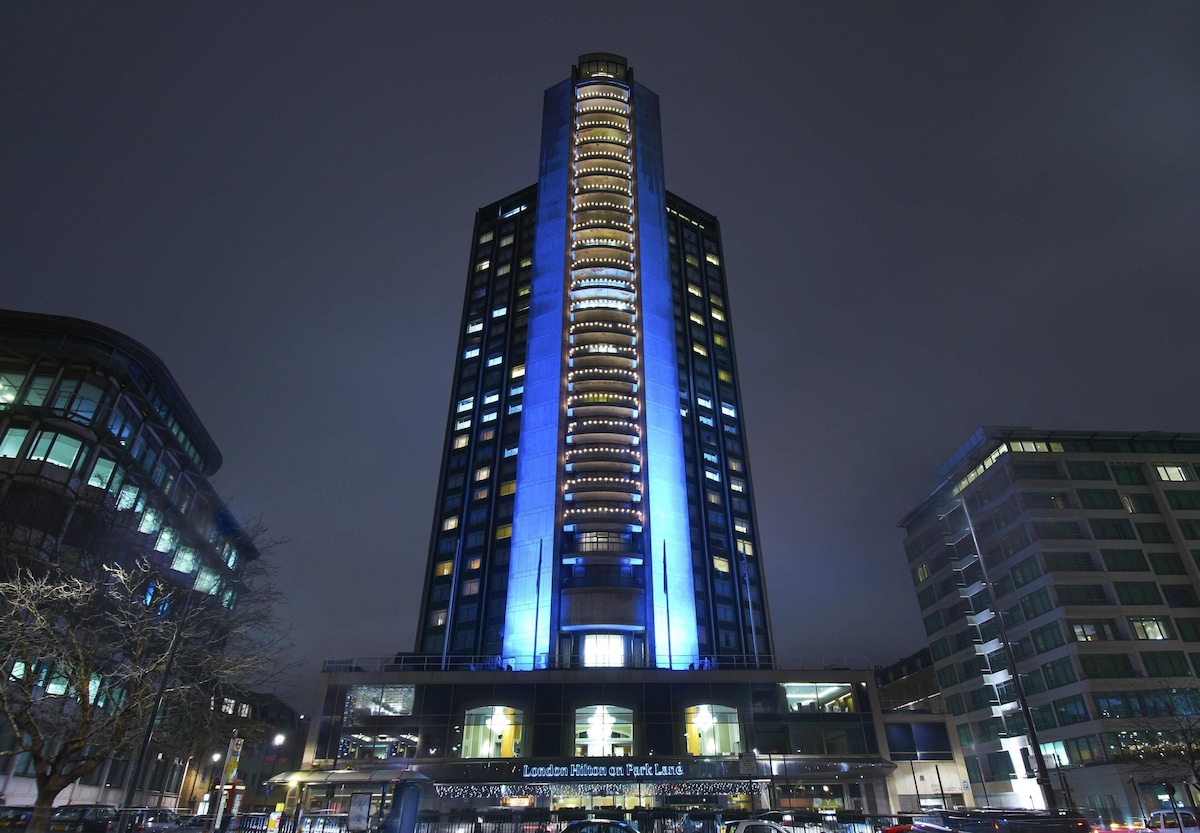
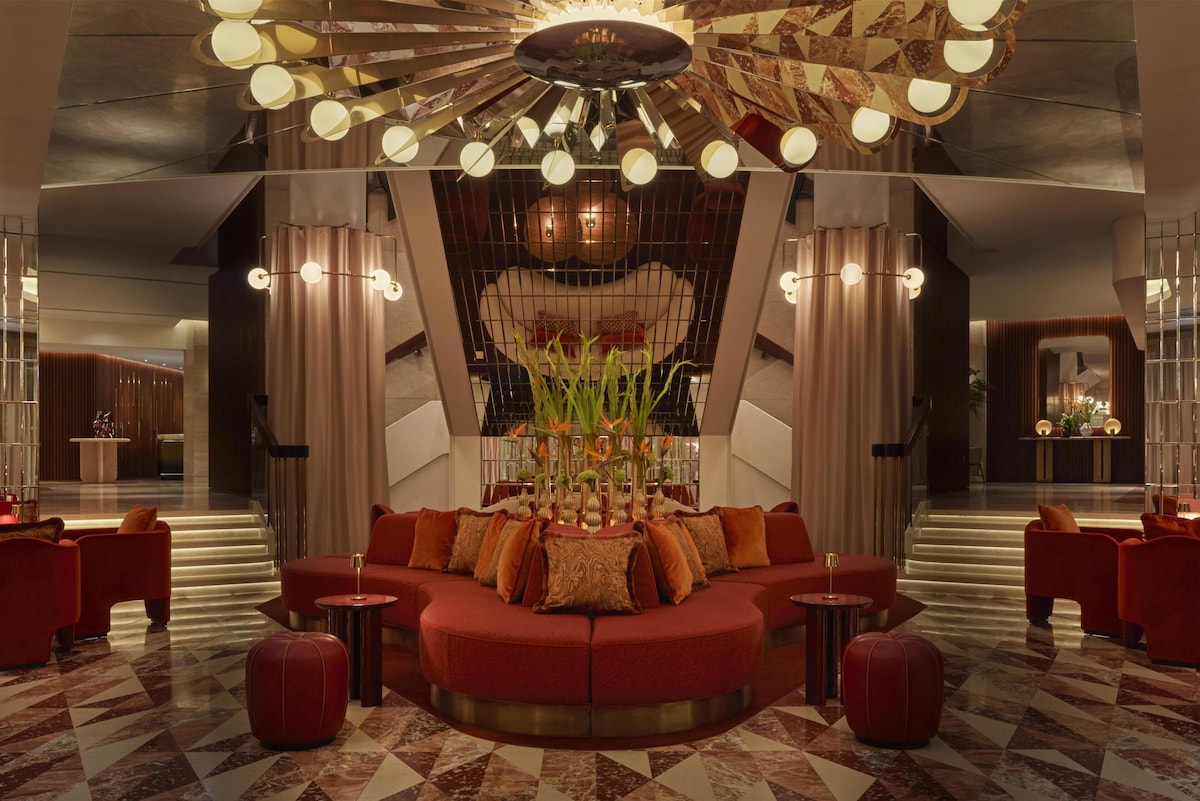
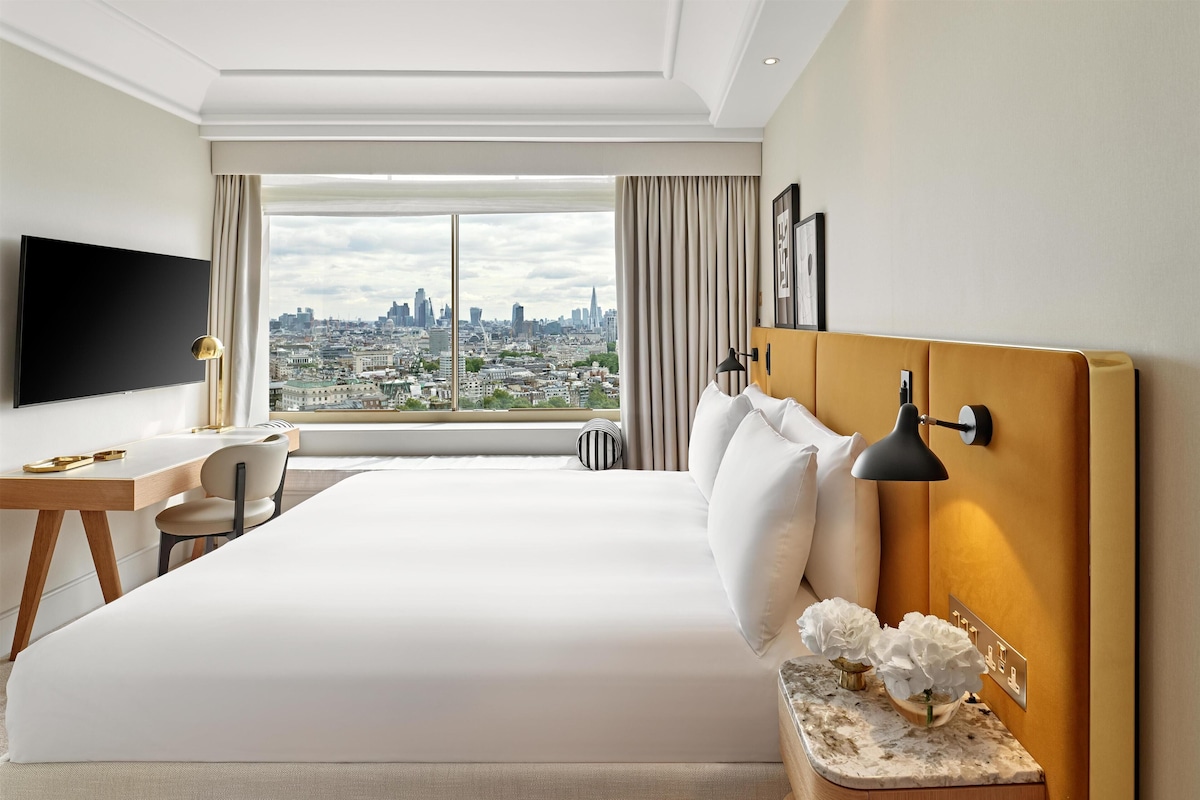
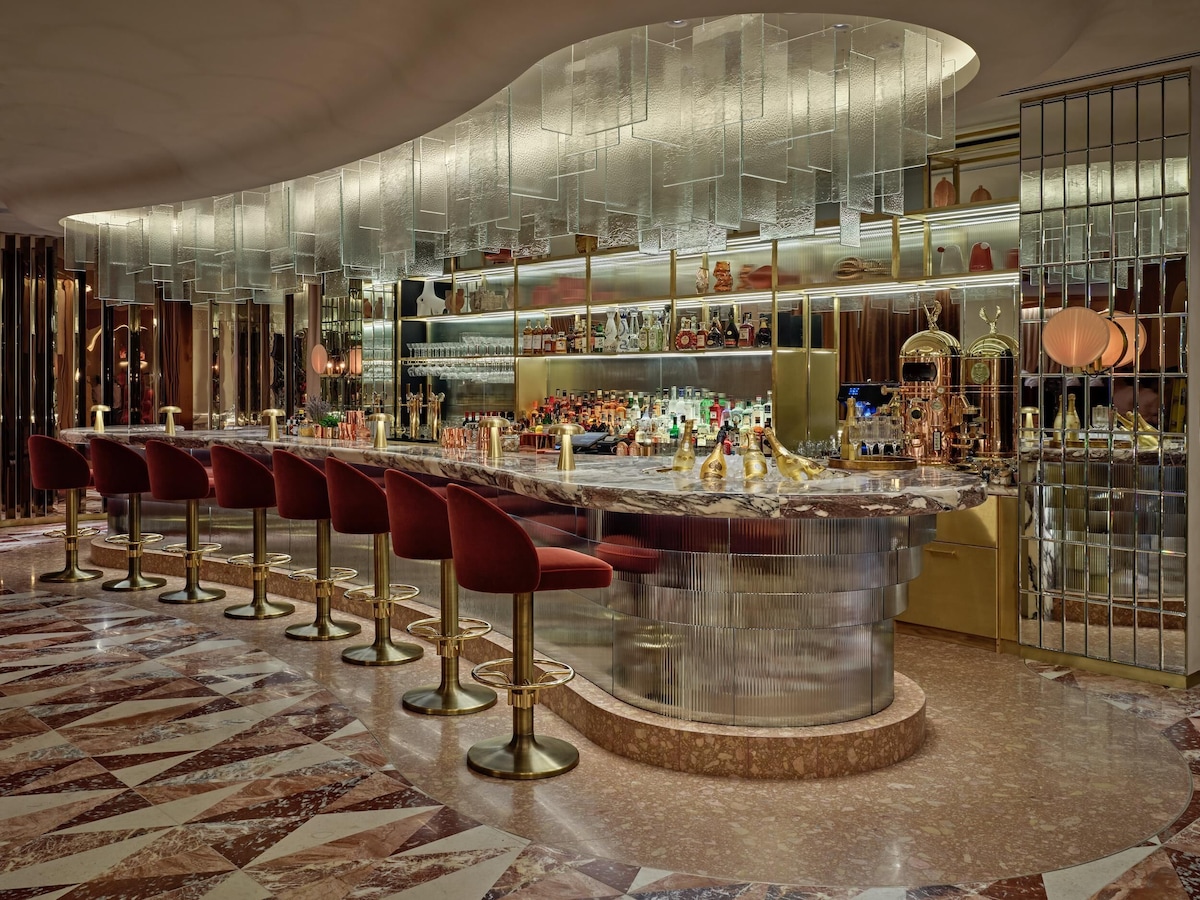
London’s first skyscraper hotel still makes its height count, with guest rooms and suites looking across Hyde Park, Mayfair, and the city skyline. Opened in 1963, London Hilton on Park Lane has carried its midcentury roots into a redesign inspired by the park below: organic forms and muted tones shape the interiors, while Park Corner Brasserie’s marble floor recalls stepping stones along a garden path. The modern British restaurant gives that connection to the park a culinary setting. Upstairs, suites on the 26th floor draw on 1960s style and the tailoring traditions of Savile Row, giving the hotel’s history a place in its present-day character.
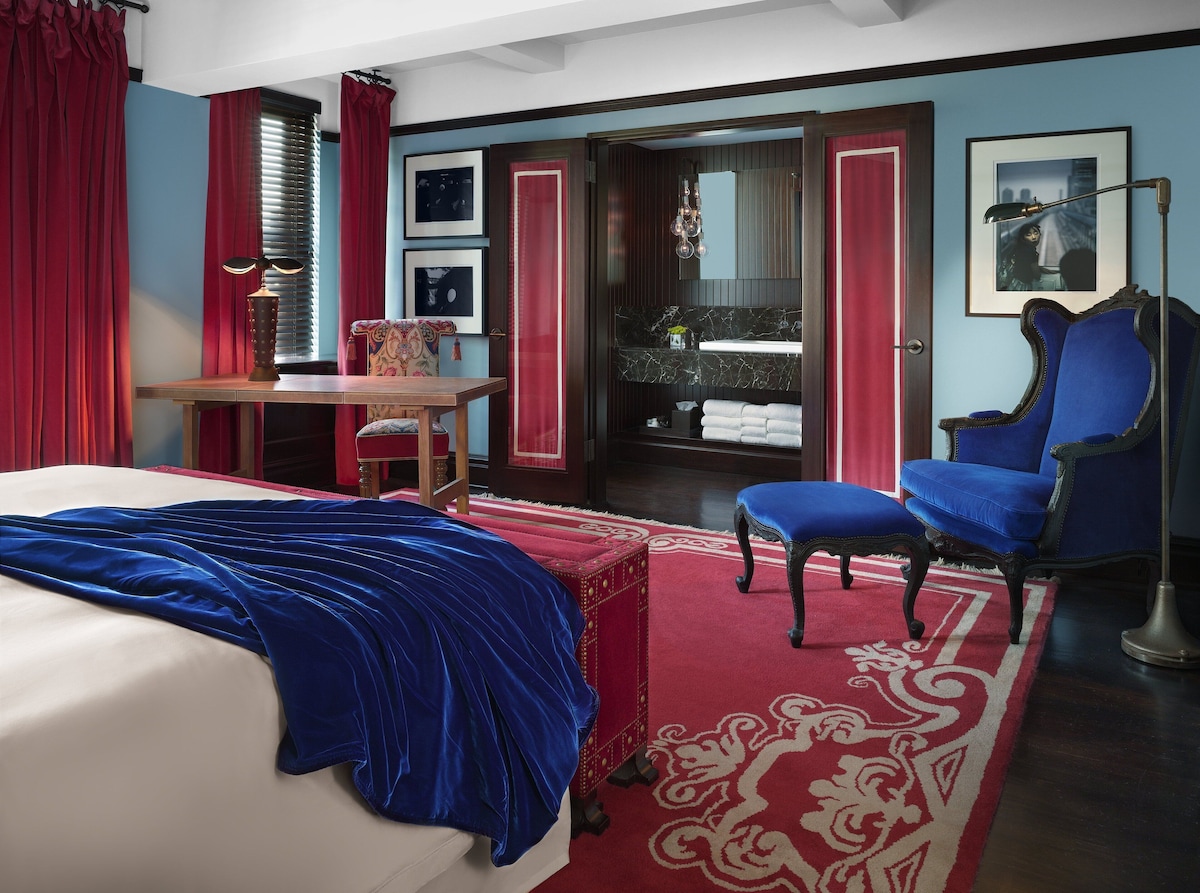
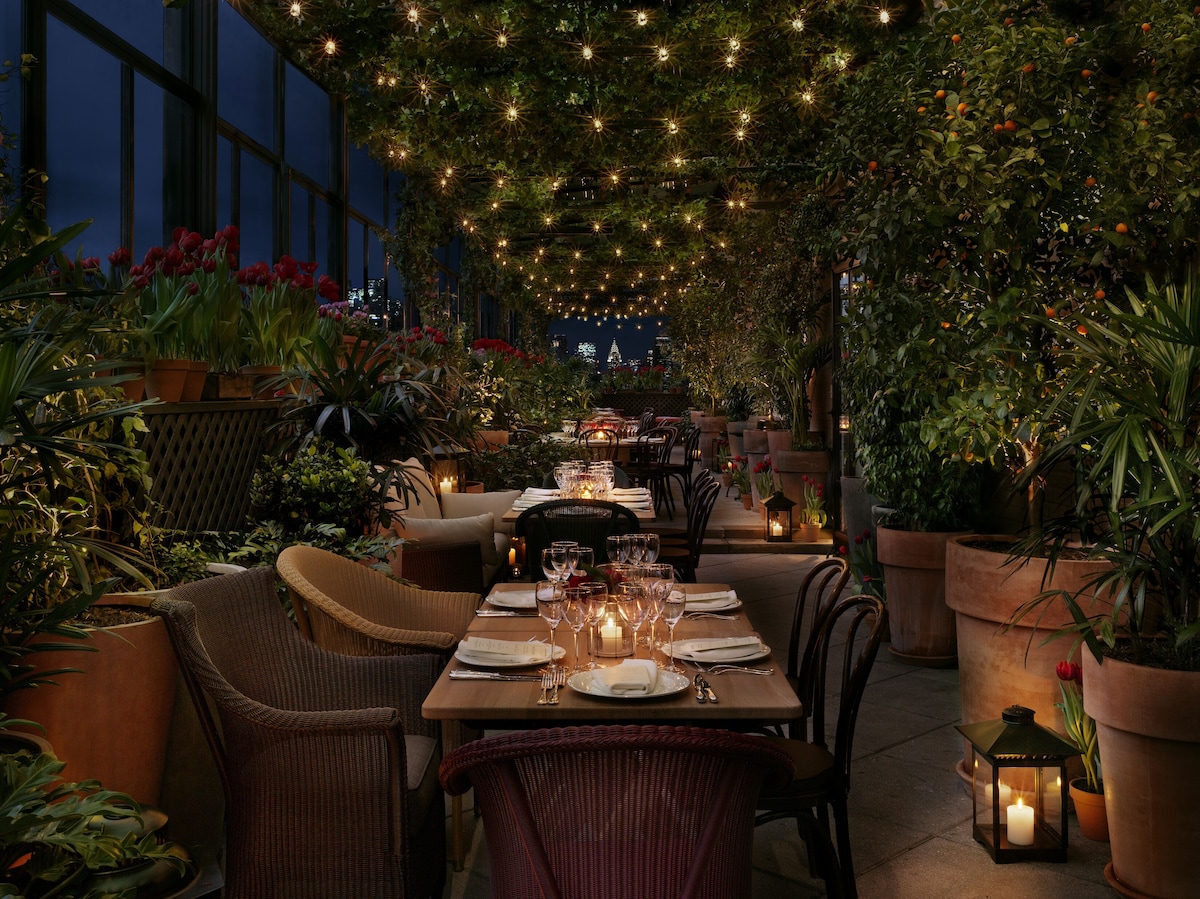
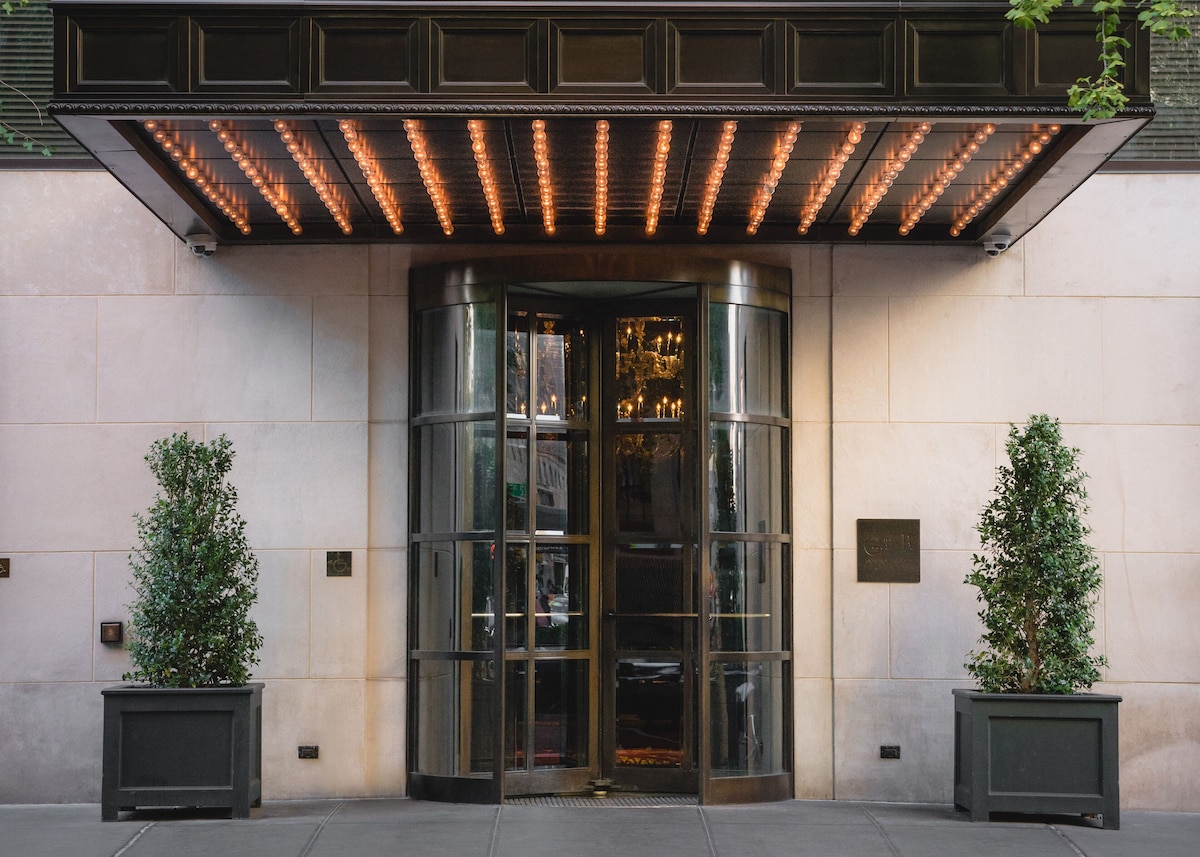
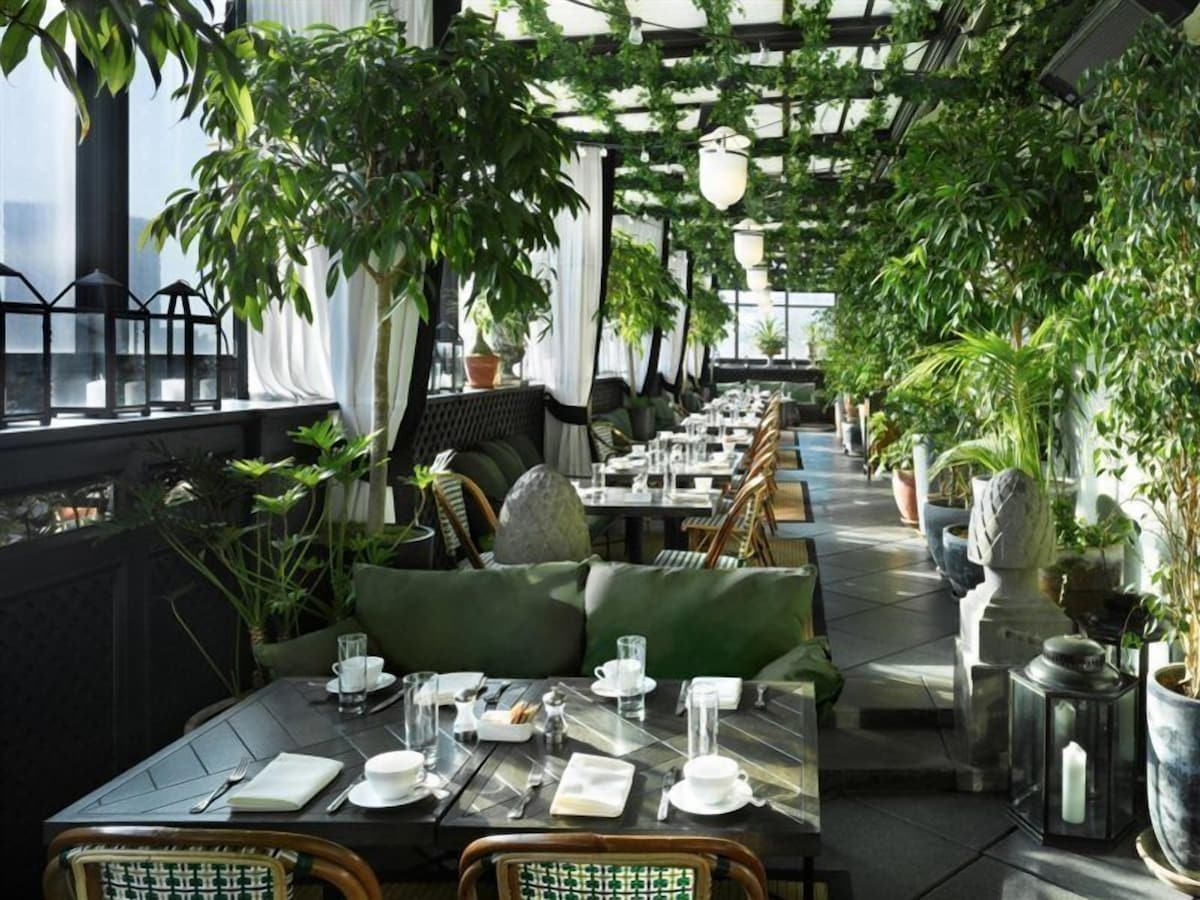
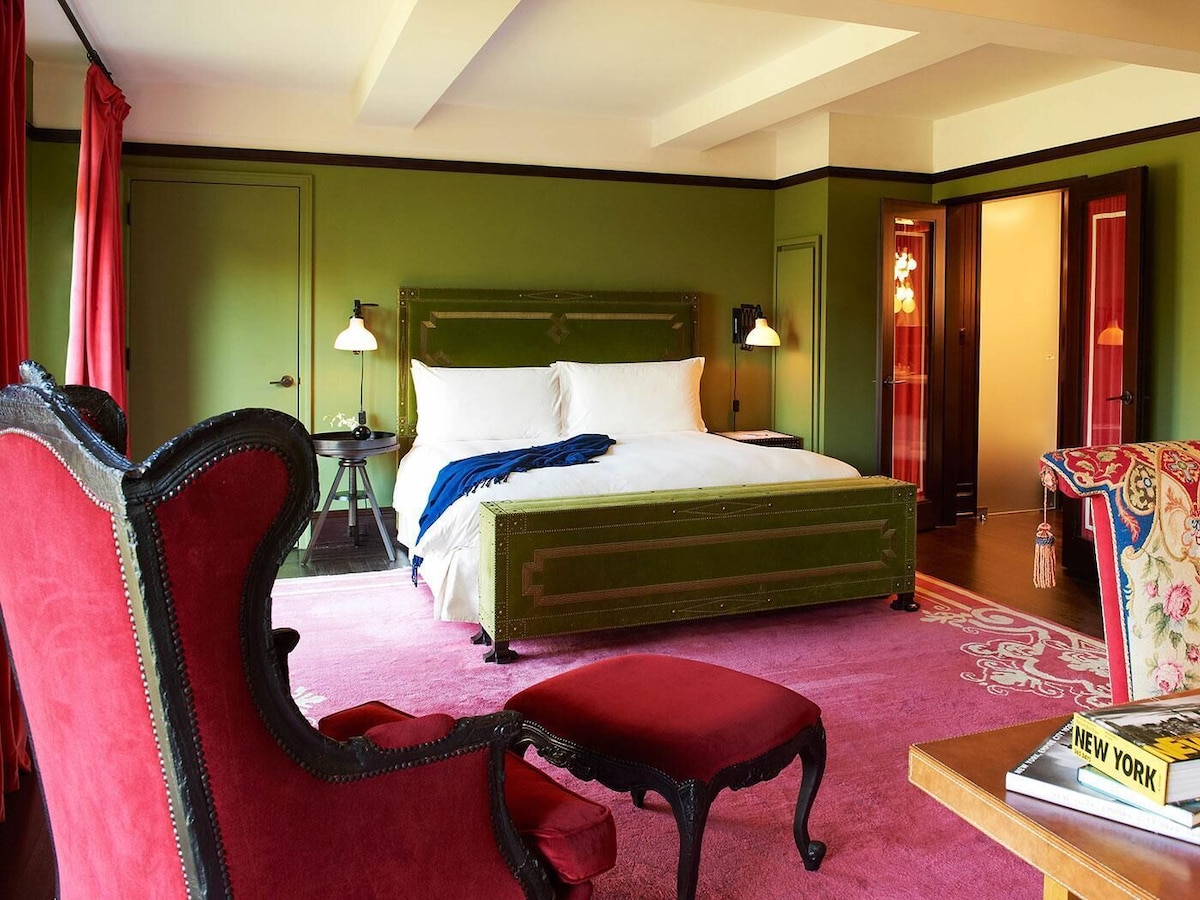
A 7,000-square-foot rooftop bar overlooking Gramercy Park is central to the planned revival of Gramercy Park Hotel. Closed since 2020, the 18-story hotel at 2 Lexington Avenue is slated for an extensive renovation by MCR and MORSE Development, encompassing its lobby, first-floor restaurants and bars, and 197 guestrooms and suites. The building dates to 1924 and occupies the former site of architect Stanford White’s estate, giving the project a substantial piece of New York history to work with. For now, it remains a hotel in waiting, with the rooftop’s full restoration among the plans for its next chapter.
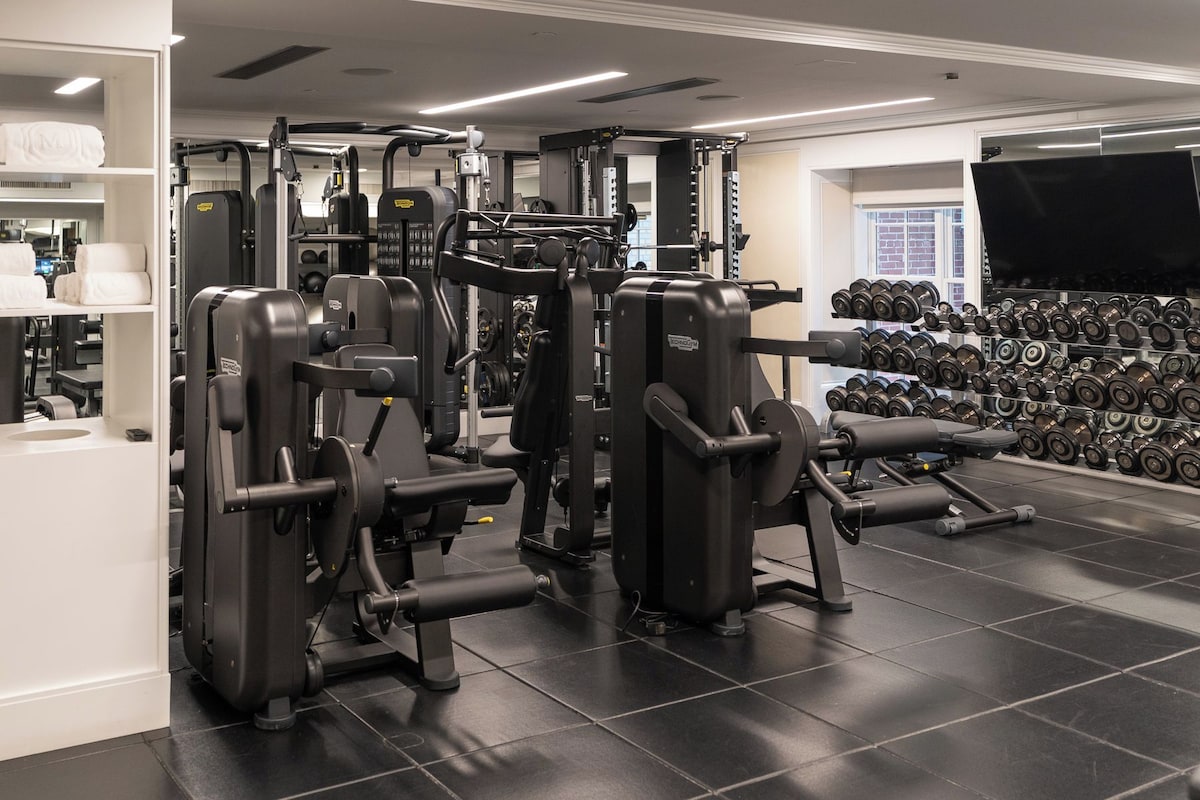
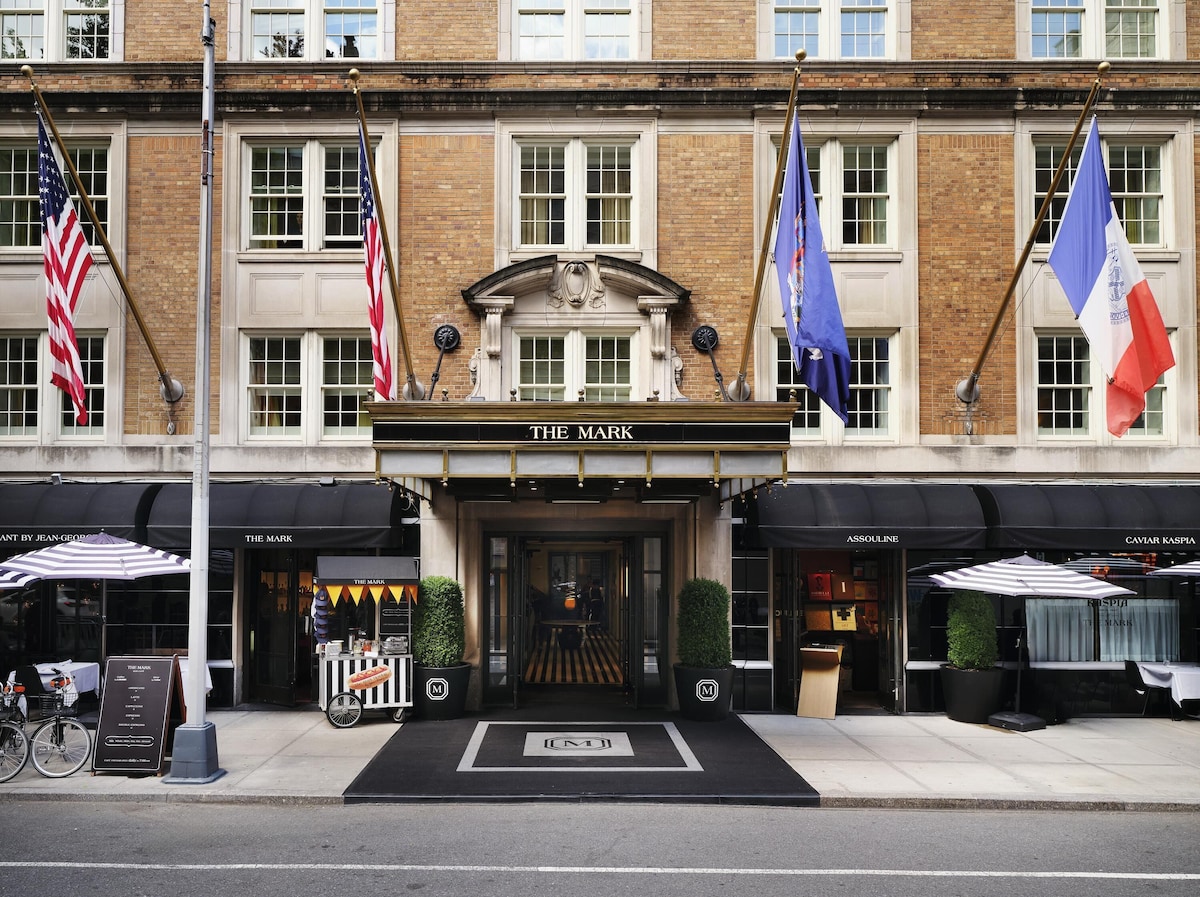
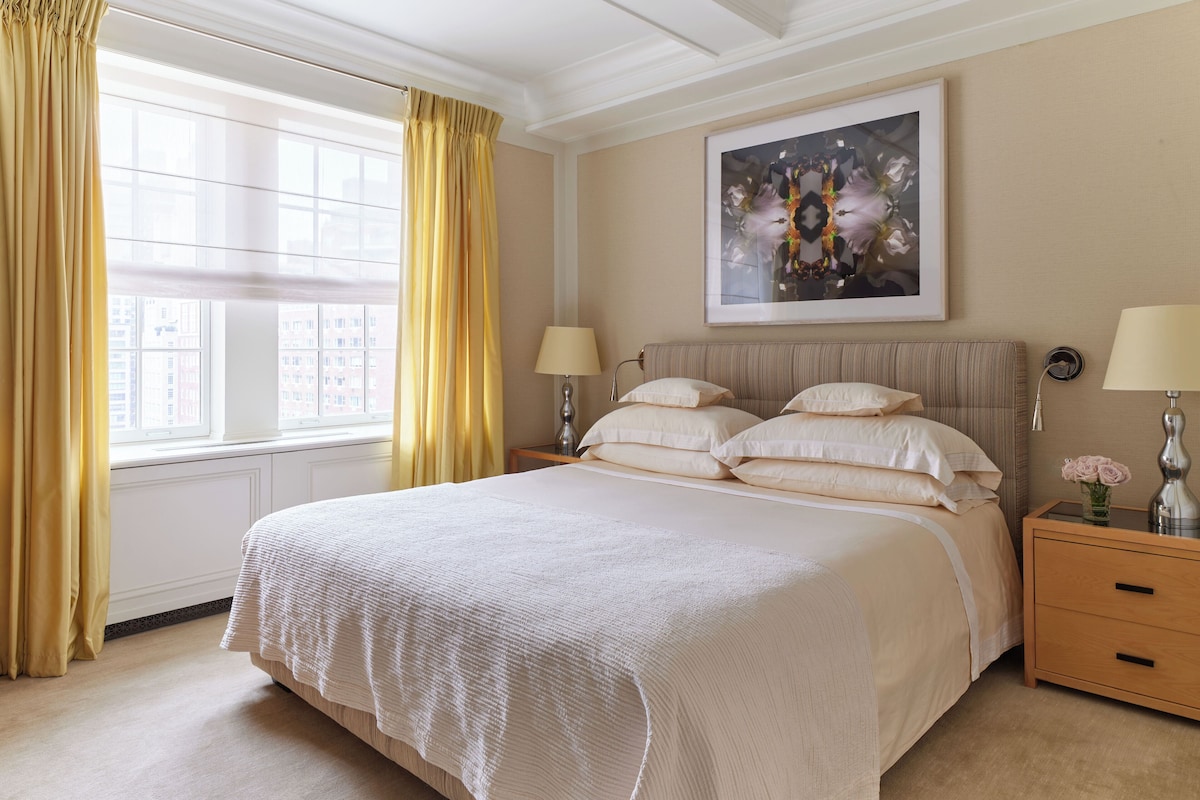
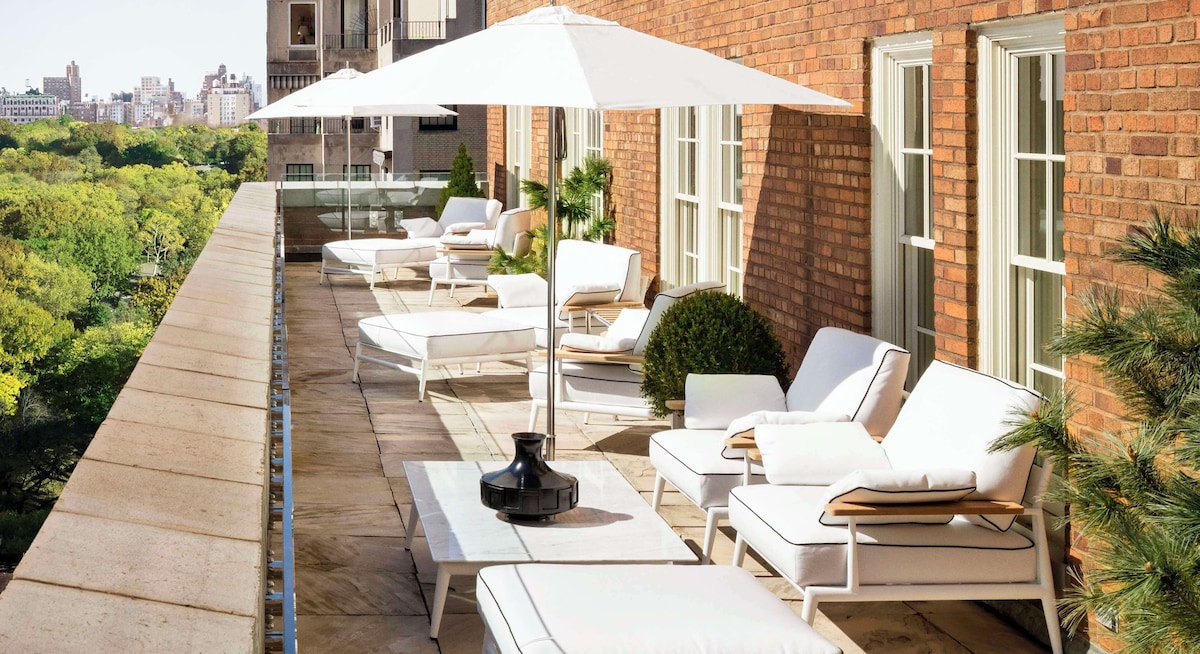
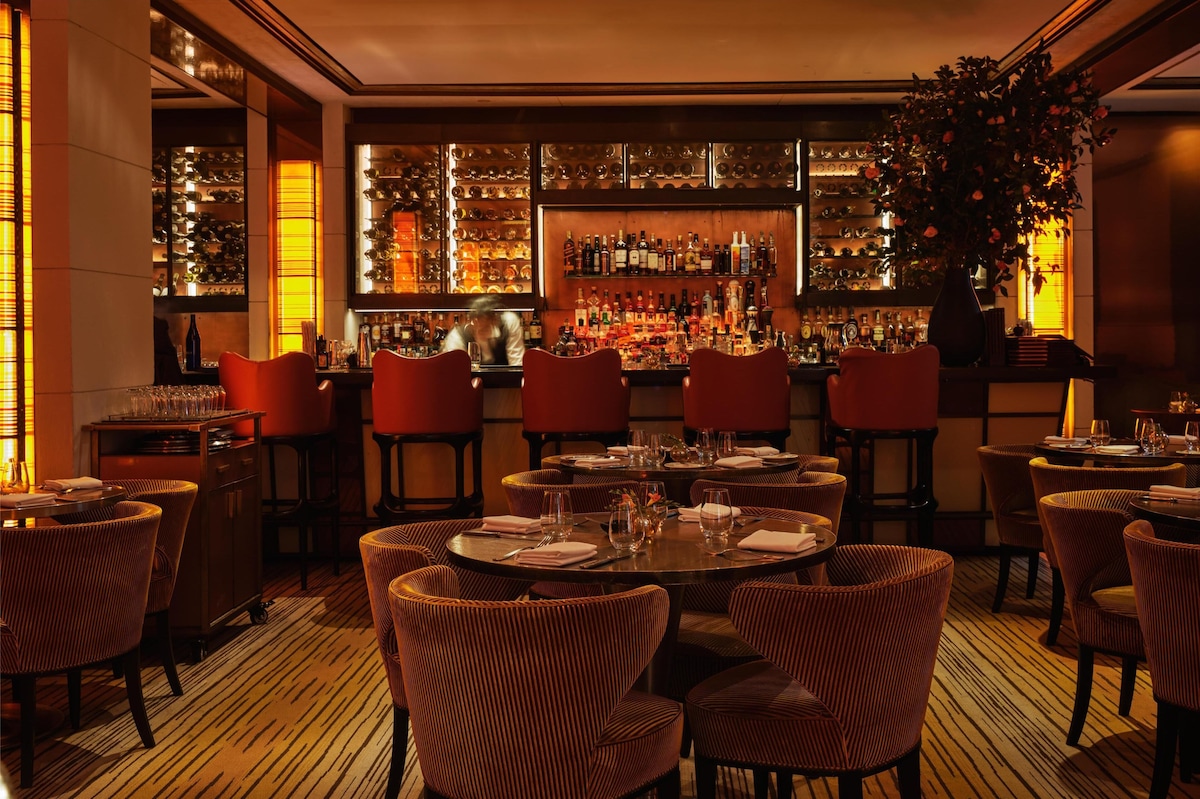
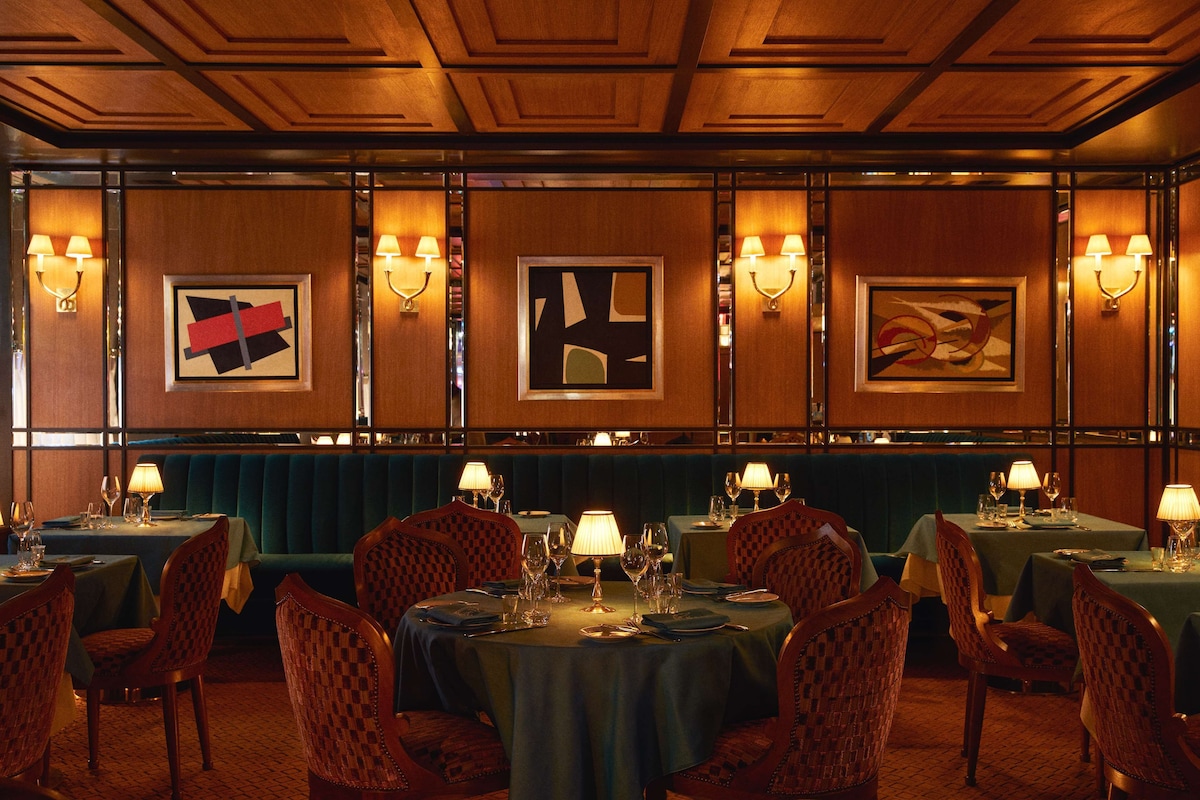
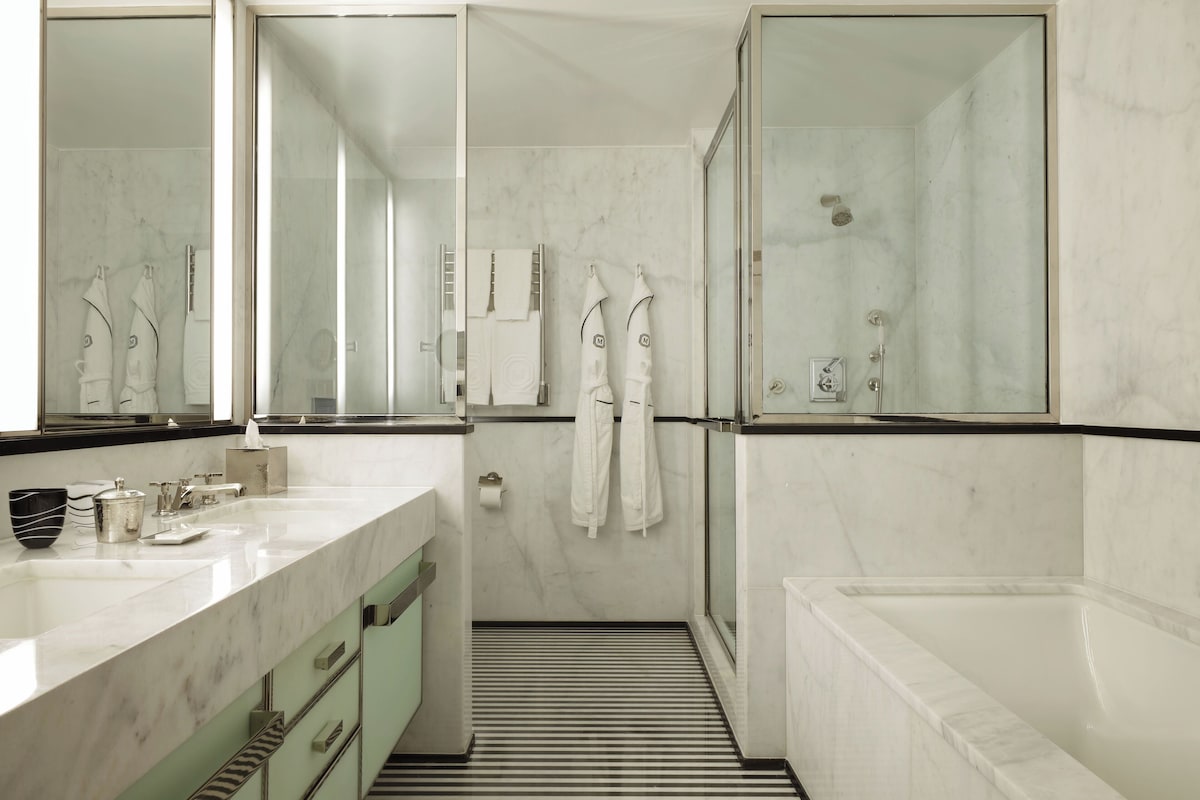
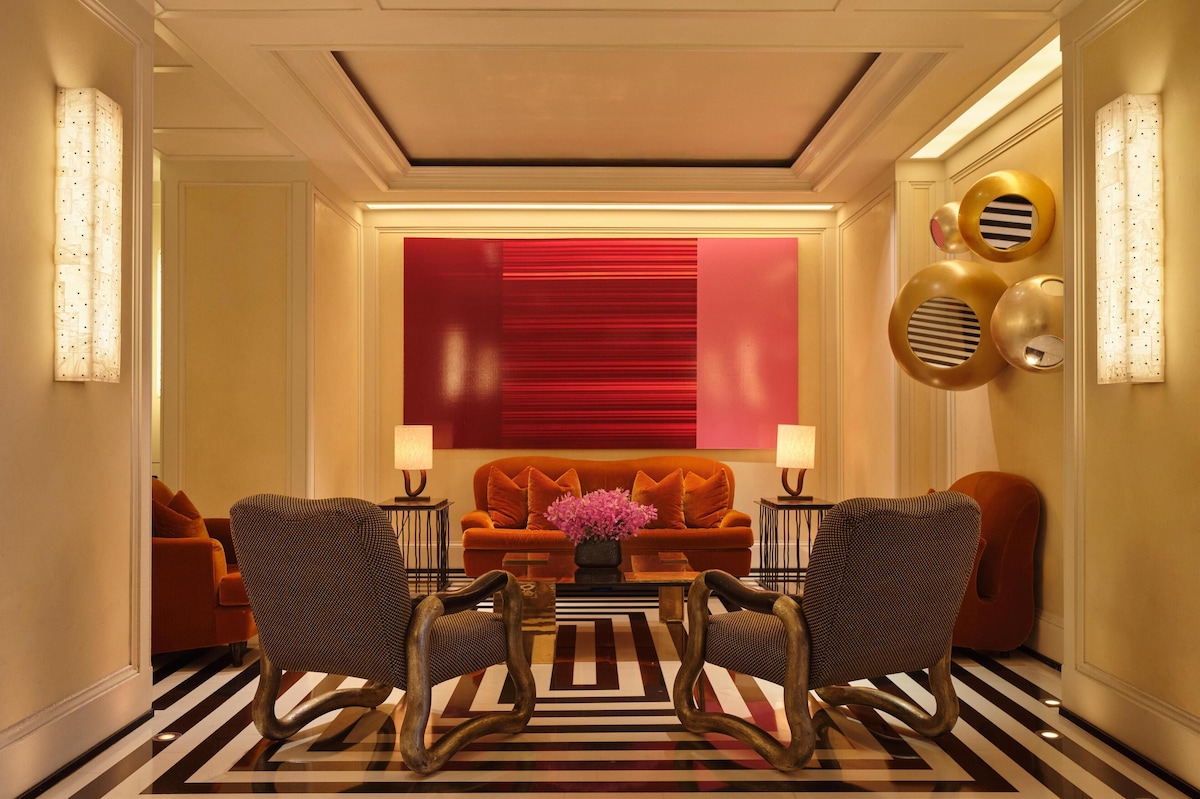
Jacques Grange gave The Mark a distinctive design vocabulary: bold black-and-white stripes, custom furnishings, and art and lighting commissioned specifically for the hotel. Working with Parisian antiquaire Pierre Passebon, he brought in contributors including Ron Arad, Vladimir Kagan, and Mattia Bonetti, giving the public spaces the appeal of a design collection. Upstairs, rooms take a more uncluttered approach, with views over Madison Avenue, East 77th Street, or townhouse gardens. The Upper East Side address puts Central Park and the Metropolitan Museum of Art within easy reach, while Jean-Georges Vongerichten’s restaurant and Caviar Kaspia—with its caviar-topped twice-baked potato—give visitors reasons to linger downstairs.
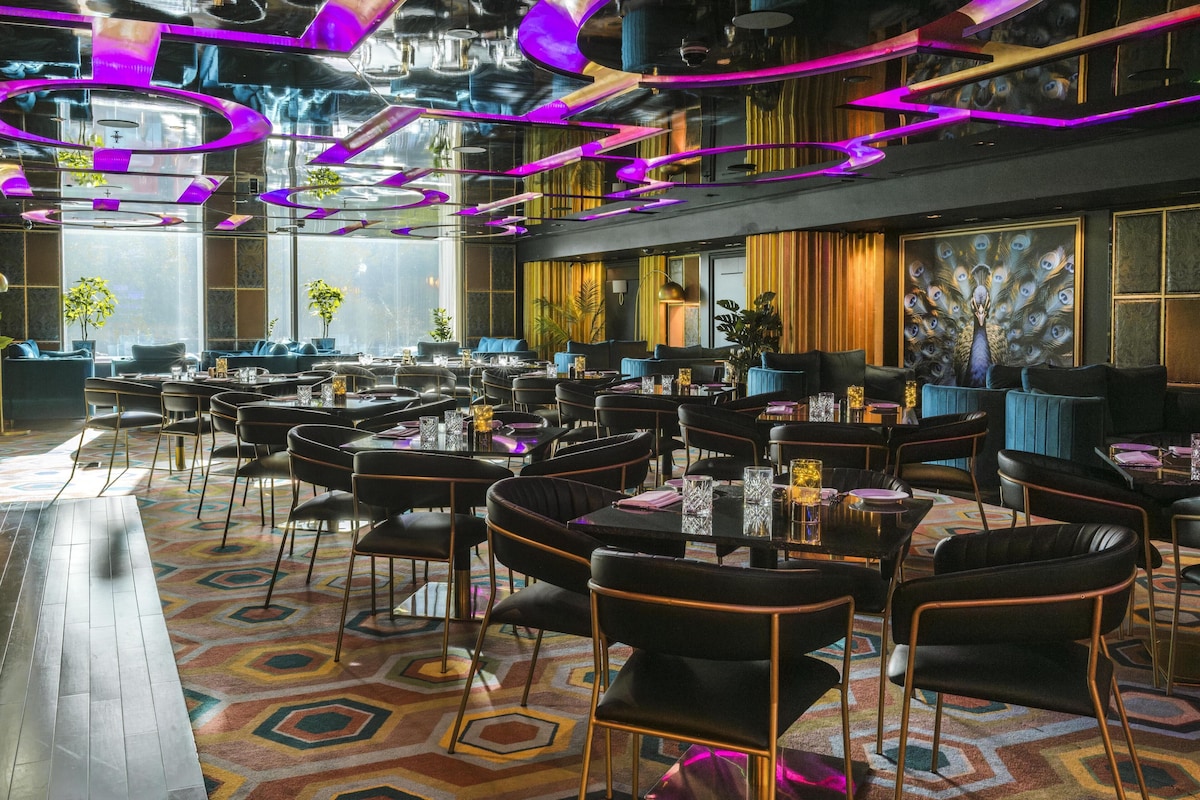
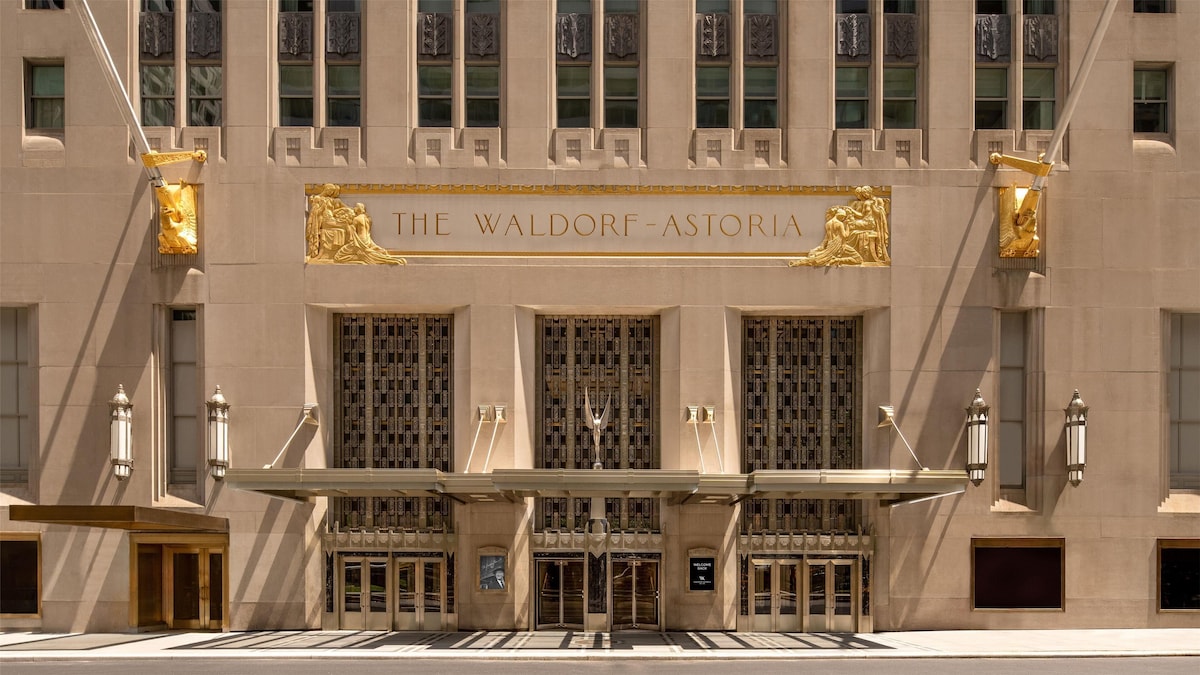
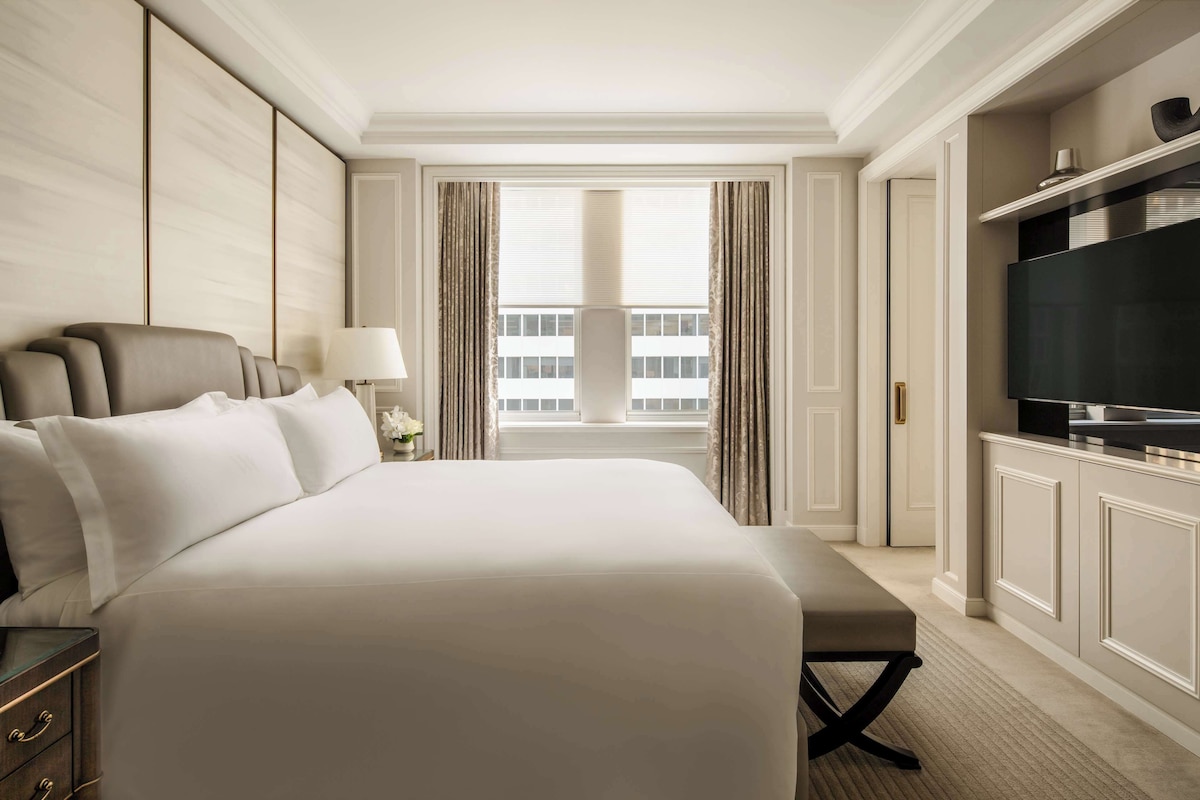
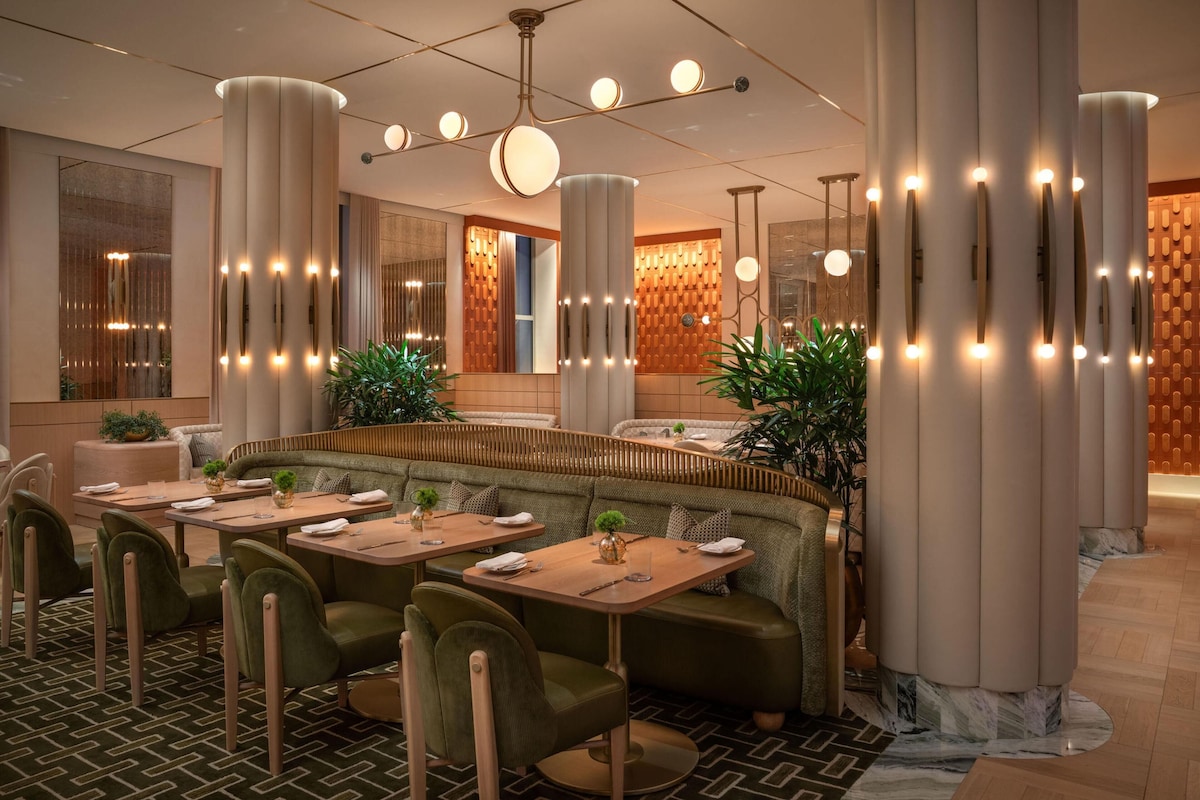
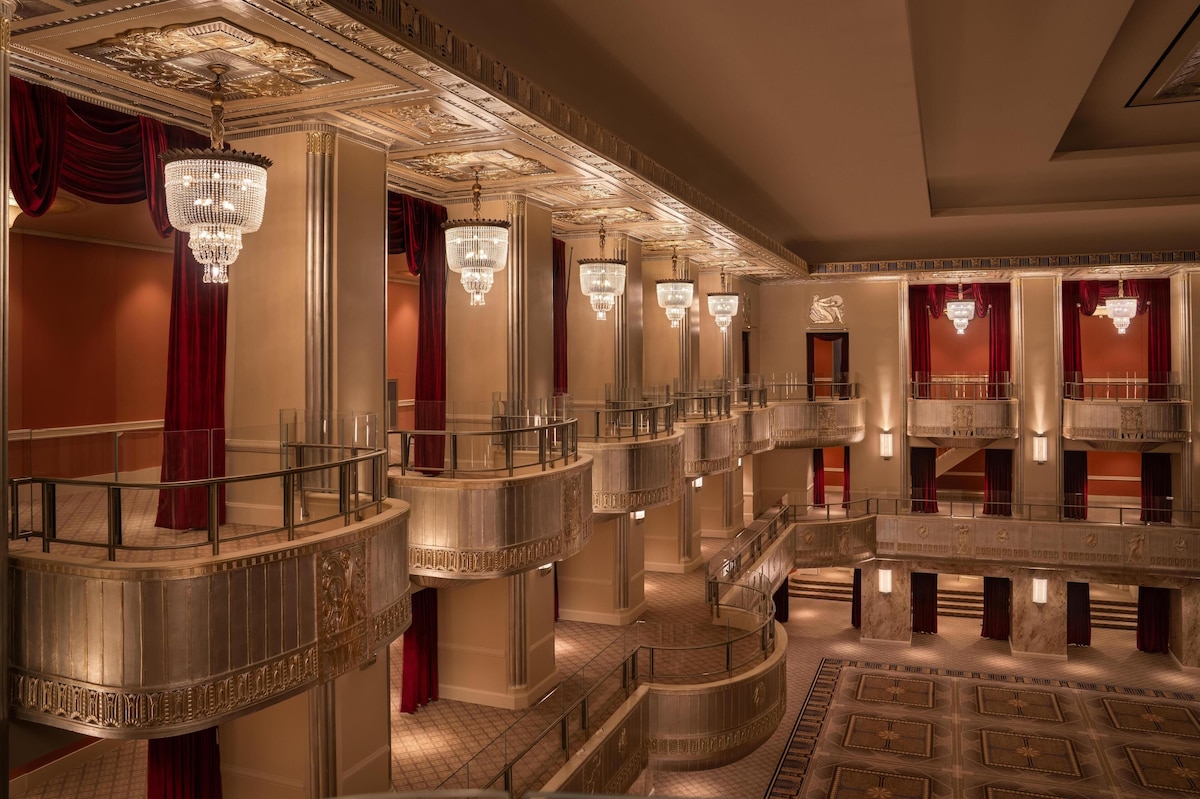
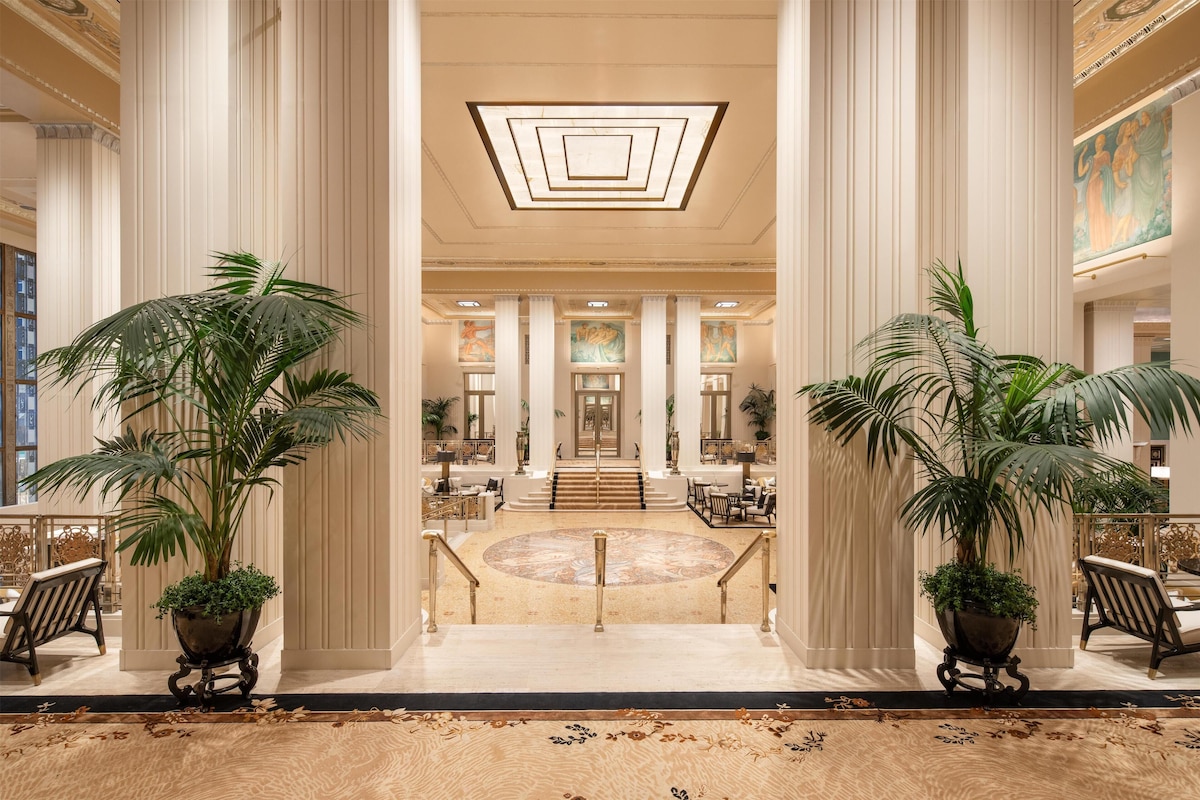
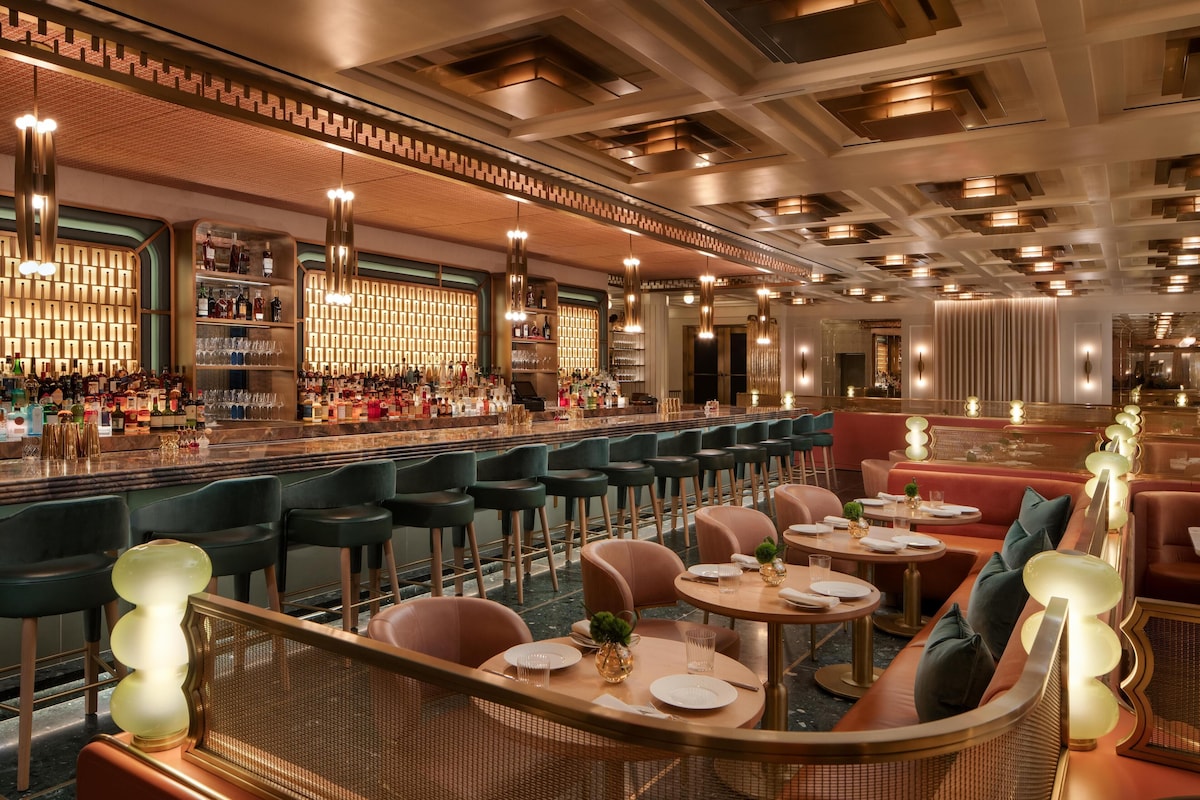
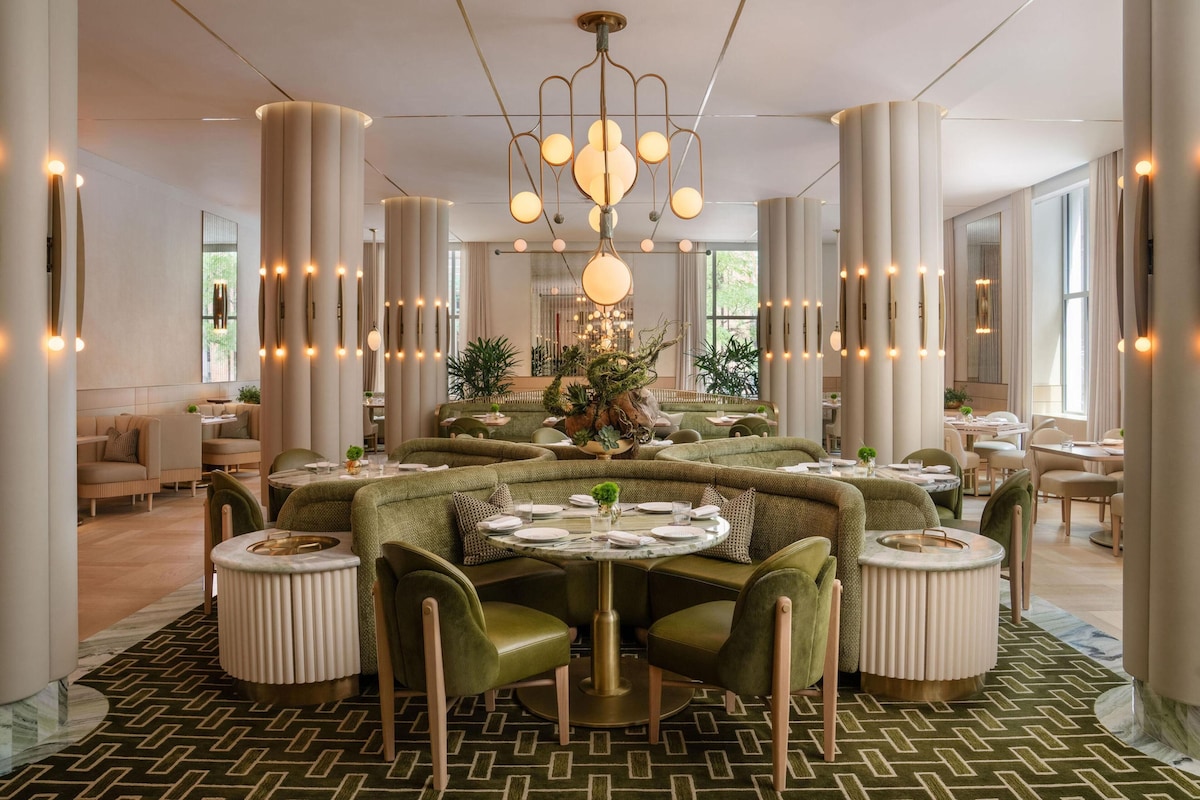
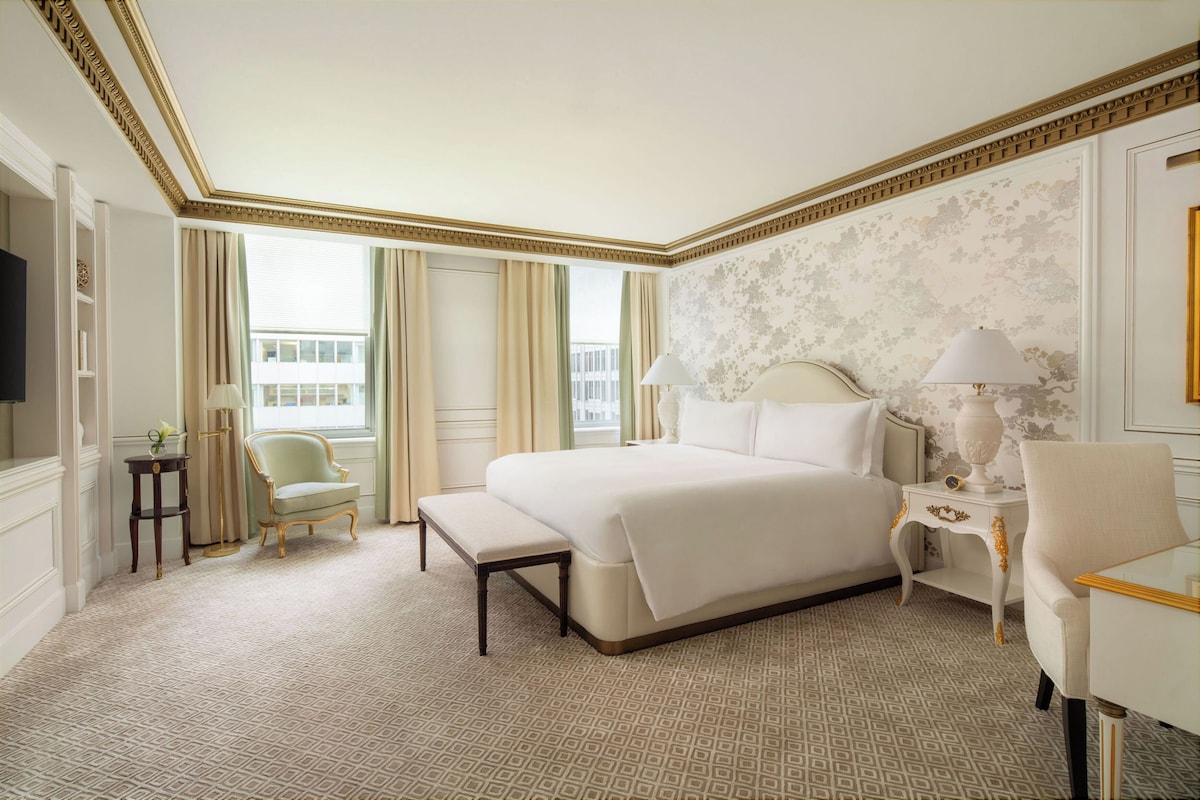
The 1893 World’s Fair clock is back at the center of the Waldorf Astoria New York’s lobby, a fitting anchor for a hotel whose recent restoration makes its architectural heritage central to the stay. Skidmore, Owings & Merrill and interior designer Pierre-Yves Rochon restored its exterior and interior spaces, preserving the scale of the Art Deco architecture. Upstairs are 375 redesigned rooms and suites; the King Room includes a seating area, writing desk, and deep soaking tub. Downstairs, Peacock Alley returns alongside Lex Yard, chef Michael Anthony’s brasserie. The Park Avenue address places guests in Midtown, near Grand Central Terminal, Rockefeller Center, and Fifth Avenue’s shops.